
Yes, swimming is possible at some—but not all—black sand beaches on Hawaii Island. The allure of these unique volcanic shores is undeniable, but ocean safety is paramount. Several factors, including strong currents, wave action, and hidden rocks, determine a beach's swim suitability.
To truly experience the Big Island's captivating black sand beaches without compromise, it's essential to know which spots offer safe entry and which are best admired from the shore. We guide our guests to the most exceptional and accessible locations, ensuring a memorable and secure encounter with these natural wonders.
Puʻuhonua o Hōnaunau National Historical Park
While not exclusively a black sand beach, the coastline within Puʻuhonua o Hōnaunau National Historical Park, often called Hōnaunau Bay or "Two Step," offers some of the Big Island's most phenomenal and safe snorkeling. The 'two step' entry point into the clear, reef-rich waters is ideal, providing immediate access to vibrant marine life. The sand itself is a beautiful mix of salt-and-pepper, interspersed with pockets of finer, darker grains.
This area is sheltered, making it a great option for families and those seeking calmer conditions. Snorkeling here is often an hours-long affair, with spinner dolphins frequently seen in the bay. Beyond the captivating underwater world, the historical significance of the park adds a profound layer to the experience. Located about 20 miles south of Kailua-Kona (a roughly 40-minute drive via Highway 11 and Route 160), it's a must-visit for both history buffs and ocean enthusiasts.
Punaluʻu Black Sand Beach
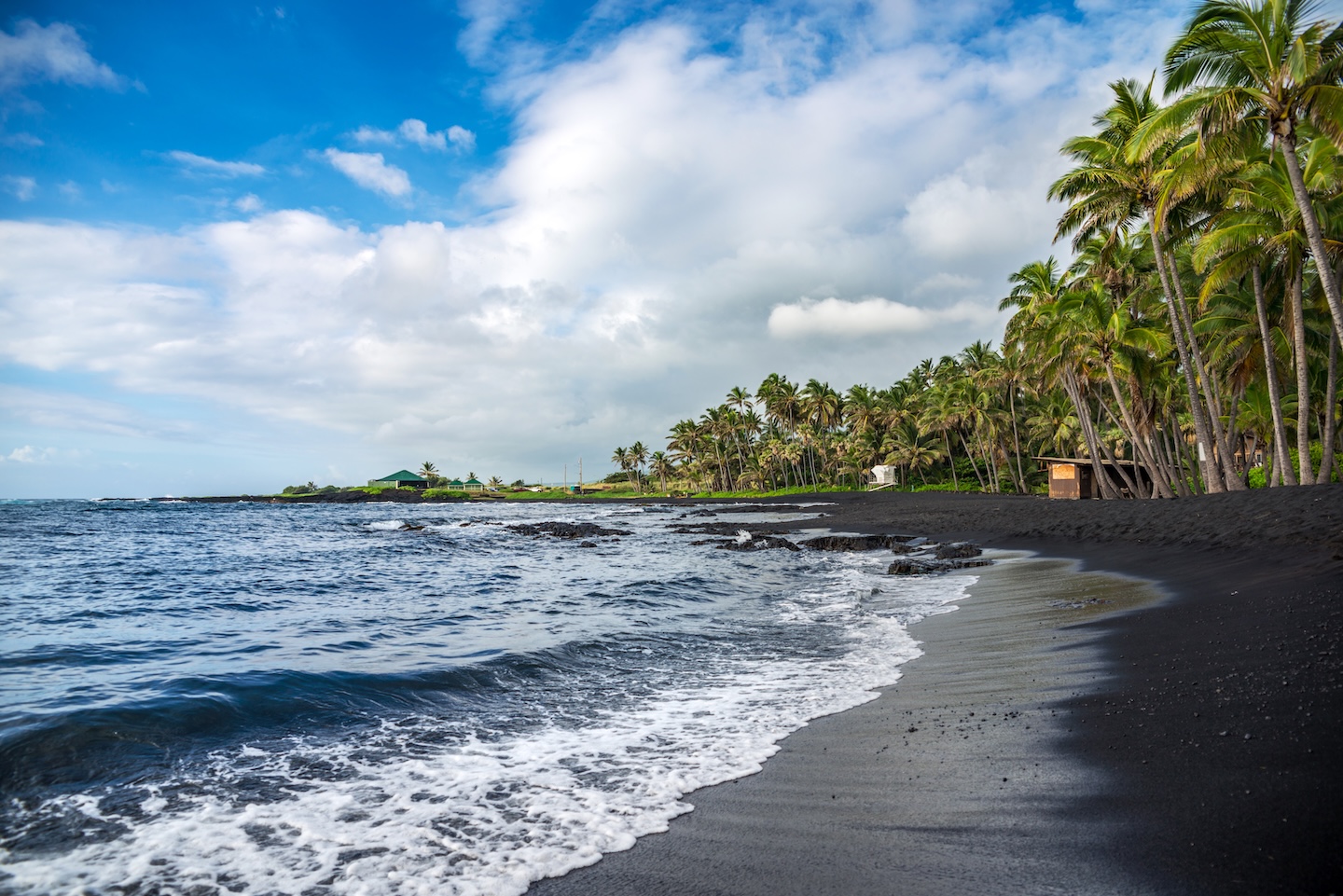
Punaluʻu is arguably the Big Island's most famous black sand beach, and for good reason. Its expansive jet-black shore, fringed by swaying coconut palms, creates an iconic Hawaiian scene. While the dramatic aesthetics are undisputed, swimming here requires caution.
Ocean Conditions at Punaluʻu
The entry into the water at Punaluʻu can be rocky, and currents can be strong, particularly during high surf. There's often a significant shore break that can catch swimmers off guard. Despite this, many visitors do swim here, typically closer to the shore in calmer conditions or near the natural freshwater springs that bubble up into the ocean, creating cooler patches.
Lifeguards are not typically present, so assessing conditions yourself is crucial. Our advice for clients is to wade in slowly, observe local swimmers, and always prioritize safety over a deep swim. The primary draw of Punaluʻu remains its stunning visual appeal and the frequent presence of honu (Hawaiian green sea turtles) basking on the warm black sand—an unforgettable sight in itself.
Punaluʻu is conveniently located along Highway 11 between the towns of Nāʻālehu and Pāhala, approximately 1 hour and 15 minutes southeast of Kailua-Kona.
Kehena Beach (a.k.a. Dolphin Beach)
Located in the Puna district on the island's eastern side, Kehena Beach is a rugged, crescent-shaped black sand beach famed for its Sunday drum circles and clothing-optional status. While the black sand here is striking, this beach is generally not recommended for swimming, especially for those unfamiliar with local ocean dynamics.
Kehena is very exposed to the open ocean, resulting in powerful waves and extremely strong, unpredictable currents. There is no protective reef, meaning the full force of the Pacific swell crashes directly onto the shore. The shore break can be intense, making entry and exit hazardous. It's a place to observe the raw power of nature, enjoy the unique cultural atmosphere, and perhaps dip your toes in the shallower, calmer areas during very tranquil conditions, but not for a robust swim.
Access to Kehena requires descending a steep, somewhat precarious path. It's approximately a 45-minute drive south from Hilo via Highway 137, also known as the Red Road or Kapoho-Kalapana Road.
Waipiʻo Valley Black Sand Beach
The iconic Waipiʻo Valley, known as the "Valley of Kings," features a dramatic black sand beach at its base. Reaching this beach is an adventure in itself, requiring a descent down a notoriously steep, unpaved road (Waipiʻo Valley Road) that is only open to vehicles with 4-wheel drive and specific vehicle dimensions. From the bottom, a short walk leads to the black sand shore.
Swimming at Waipiʻo Valley Beach is strongly discouraged. The currents here are exceptionally powerful, known as a 'rip current factory.' The deep, open ocean immediately offshore and the funneling effect of the valley walls create treacherous conditions. Drownings have occurred here, underscoring the serious risks.
This beach is best appreciated for its pristine, wild beauty, its historical significance, and the dramatic views. Enjoy the landscape, feel the sand beneath your feet, and listen to the roar of the ocean, but refrain from entering the water. Waipiʻo Valley is situated on the Hamakua Coast, about an hour's drive north of Hilo.
Experiencing Black Sand Beaches Safely
When exploring any of Hawaii Island's diverse beaches, particularly the black sand varieties, always prioritize safety. Look for posted warning signs, assess wave action and currents, and if in doubt, stay out of the water. For an unparalleled Big Island experience, consider a private tour with High-End Hawaii. Our expert guides navigate the island's best routes, sharing insights into its geology, history, and culture while ensuring comfort and safety at every turn. We curate an itinerary that aligns with your preferences, whether it's leisurely exploration or focused activity.
Many of the captivating black sand beaches, along with their unique geology and cultural significance, are explored in our comprehensive guide to the island's black sand shores. For direct inquiries, we welcome calls at +1 (808) 204-4745 to discuss bespoke arrangements.
Essential Safety Tips:
- Observe conditions: Look for strong currents, large waves, and rocky entry points.
- Look for lifeguards: If present, heed all their warnings and flags.
- Never swim alone: Always have a companion.
- Know your limits: Don't overestimate your swimming ability.
- Protect your feet: Black sand can get intensely hot in the sun; wear appropriate footwear. Volcanic rock can also be sharp.
The High-End Hawaii Take
The Big Island's black sand beaches are geological marvels, testaments to the island's active volcanic nature. While some offer idyllic swimming and snorkeling opportunities, others demand respect from a safe distance. Our approach is always to provide an intimate, informed journey to these extraordinary places, balancing the thrill of discovery with an unwavering focus on safety and comfort. LESS CROWD. MORE WOW.
Keep going