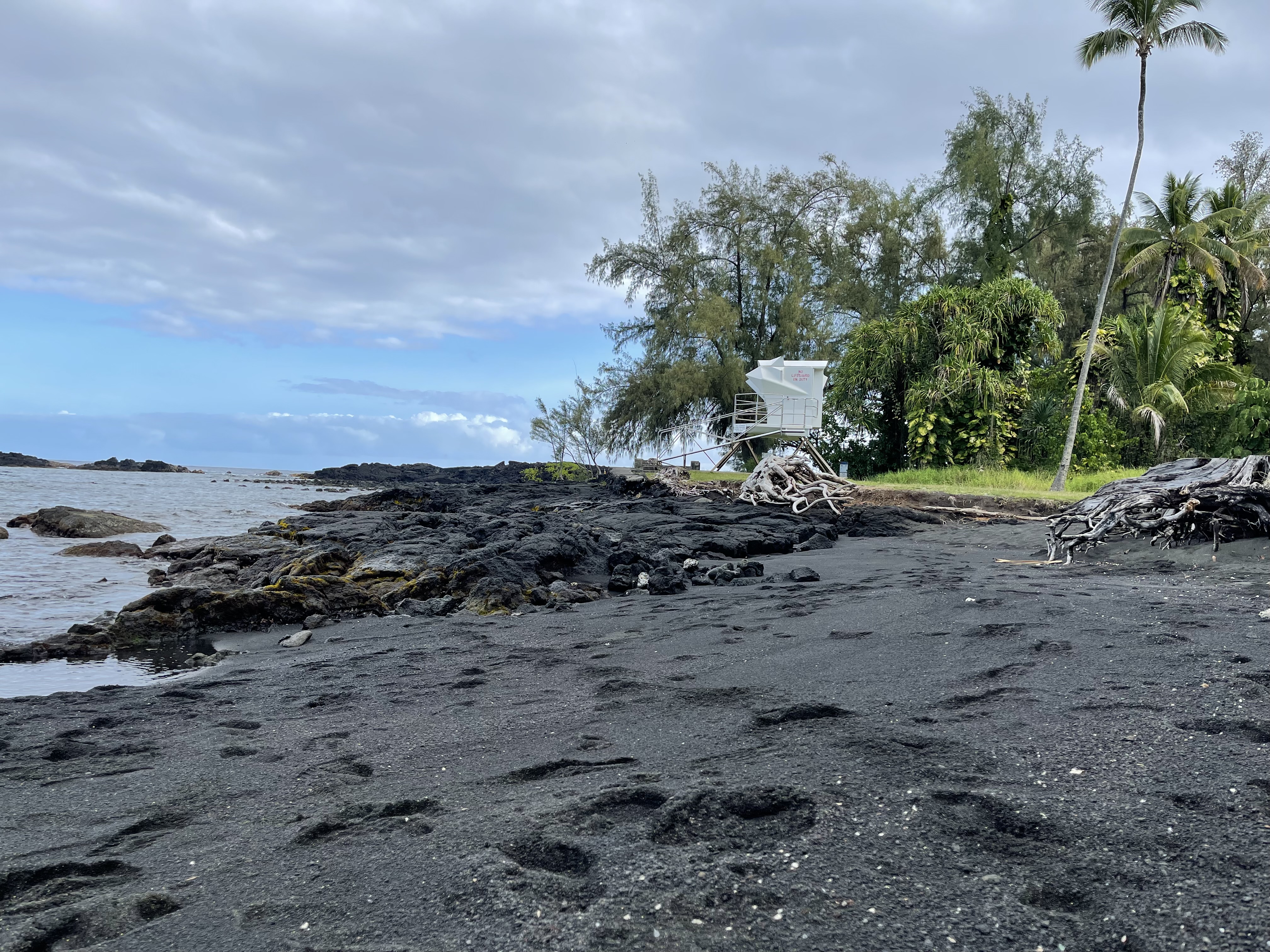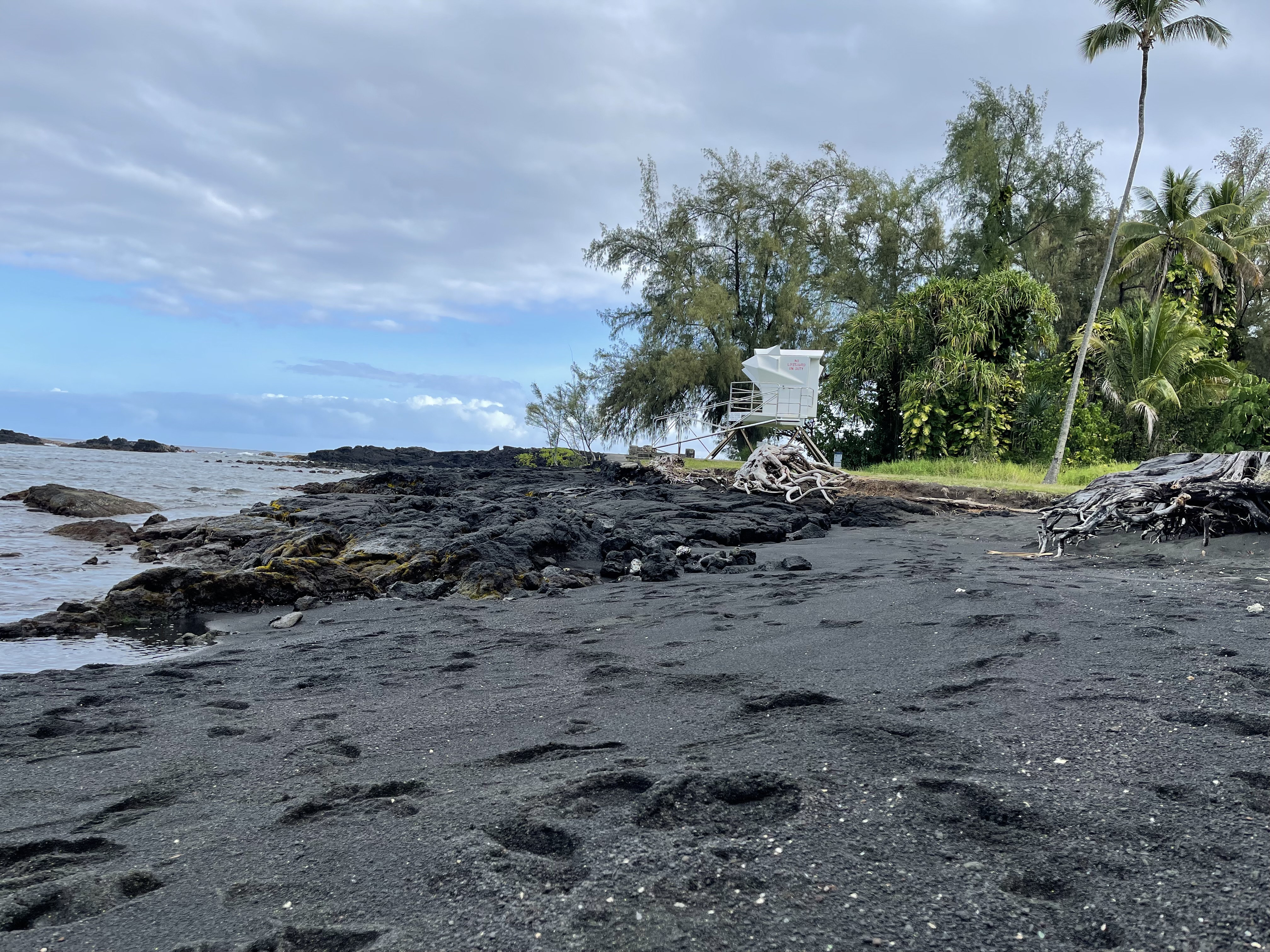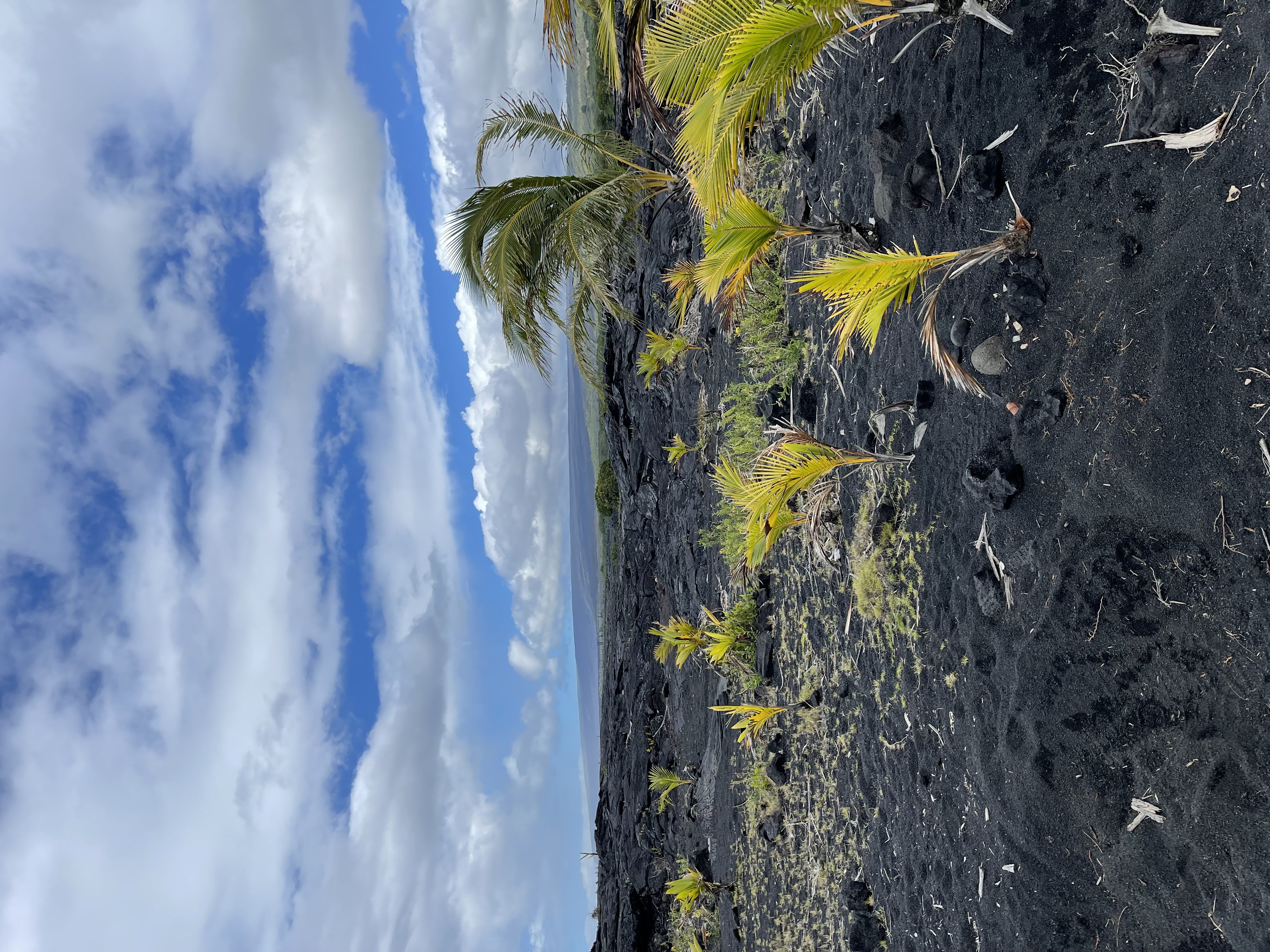
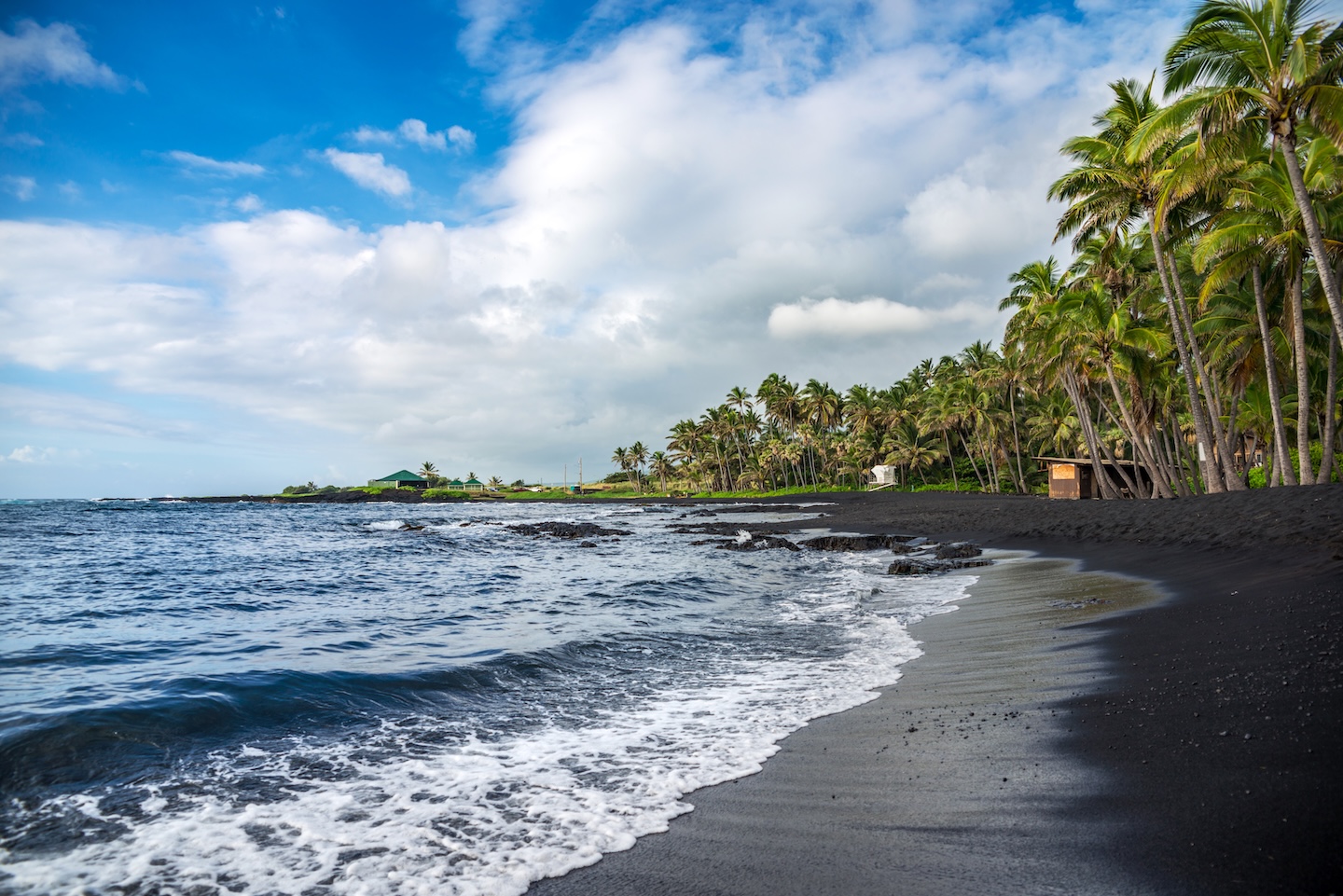
Black sand beaches are one of the most striking natural features you can visit in Hawaii. Unlike the powdery white coral sand most travelers expect, these shorelines are built from shattered volcanic rock, jet-black, glittering with minerals, and often warm enough from the sun that sea turtles haul out to rest on them. If you are planning a Big Island trip, Punaluʻu Black Sand Beach is the one you have probably seen in photos. This guide covers how these beaches form, where to find them across Hawaii, what to expect when you arrive, and how to visit responsibly.
How black sand beaches form
The science is direct. Hawaii sits over a volcanic hot spot. Magma rises from deep in the mantle, erupts through cracks in the crust, and lava flows downhill toward the ocean. When that lava, often 2,000 degrees Fahrenheit or hotter, hits water roughly 75 degrees, the temperature shock is violent. The rock shatters into glassy shards, fragments, and granules. Waves then pound those fragments against the shoreline for years, grinding them into the fine black sand that defines beaches like Punaluʻu.
Not all volcanic coastlines become black sand beaches. The lava must reach the ocean in sufficient volume, the shoreline must have the right slope and wave energy to trap and grind the material, and the beach must be replenished faster than erosion carries it away. On the Big Island, where Kīlauea and Mauna Loa are still active, that process is ongoing. The sand you walk on at Punaluʻu may contain particles from eruptions that happened decades or centuries ago.
One thing that surprises first-time visitors: black sand is not soft like coral sand. It is heavier, denser, and can get significantly hotter in the sun because dark color absorbs more light. It also does not reflect light the same way, which makes the turquoise water next to it look even more vivid in photographs.
Where to find black sand beaches in Hawaii
Black sand beaches exist on multiple islands, but the two most famous and accessible are on the Big Island and Maui. The Big Island has the most volcanic activity and therefore the greatest concentration of black sand shorelines. Mauiʻs most notable black sand beach is at Waianapanapa State Park, formed from the erosion of ancient lava flows rather than recent ocean entry.
On the Big Island, the best-known black sand beaches include:
- Punaluʻu Beach: The most photographed black sand beach in Hawaii. Located on the Kaʻu coast between Naʻalehu and Pāhala, it is a county beach park with facilities, coconut palms, and a resident population of Hawaiian green sea turtles.
- Keawaiki Beach: A smaller, more remote black sand stretch north of Kona, near the 1801 lava flow from Hualālai. Access requires a short hike or four-wheel-drive vehicle.
- Kaimū Beach: Once a famous black sand beach near Kalapana in the Puna district, it was buried by the 1990 Kīlauea lava flows. A new black sand beach has formed where the lava met the ocean, though access conditions vary.
- MacKenzie State Recreation Area: The shoreline near this park on the Puna coast has patches of black sand and pebbles mixed with lava rock.
On Maui, Waianapanapa State Park near Hana is the headline black sand destination. The beach there is smaller, framed by sea cliffs and a lava tube, and requires a reservation to enter the park.
Punaluʻu Beach on the Big Island
Punaluʻu is the black sand beach most people mean when they search for "black sand beach Hawaii." It is located on the southeastern Kaʻu coast, roughly 65 miles south of Kailua-Kona and about 25 miles southwest of Volcanoes National Park. That location makes it a natural stop on the route between Kona and the park, which is why most private tours include it in a longer volcano day.
The beach sits inside a small county park with picnic tables, restrooms, and a grassy area shaded by coconut palms. The sand itself is a deep, charcoal black, and the contrast against the aquamarine water is genuinely dramatic in person. On clear days you can see the Mauna Loa summit in the distance behind the beach.Do not take sand home. Removing sand, rocks, or any natural material from Hawaii is illegal under state law and considered culturally disrespectful. Hawaiian tradition holds that Peleʻs belongings should remain in Hawaii.
Punaluʻu also has a freshwater spring that bubbles up through the sand in certain spots. The water is cold, sometimes startlingly so, because it comes from underground sources rather than the ocean. That cold water mixing with warm salt water creates an unusual shoreline environment.
The beach is accessible by car. From Kona, take Highway 11 south through Captain Cook, Ocean View, and Naʻalehu. The turnoff is well marked. From Hilo or Volcanoes National Park, take Highway 11 west. There is a parking lot that rarely fills completely, though tour vans and rental cars can create congestion midday.
Waianapanapa State Park on Maui
Waianapanapa, often called Honokalani Beach, is Mauiʻs signature black sand beach. It sits inside a state park on the northeastern coast, just before Hana on the famous Road to Hana drive. Unlike Punaluʻu, which was created by relatively recent lava reaching the ocean, Waianapanapaʻs black sand comes from the gradual erosion of much older volcanic coastline.
The setting is different too. Waianapanapa is smaller, hemmed in by steep volcanic cliffs, sea caves, and a lava tube you can walk through. The surf tends to be rougher, and swimming is generally discouraged. The park now requires advance reservations for entry, with timed slots to manage visitor impact on the fragile coastline.
If you are trying to decide between the two, the practical answer is this: if you are on the Big Island, Punaluʻu is the obvious choice. It is easier to reach, has more facilities, allows for longer stays, and pairs naturally with a day at Volcanoes National Park. Waianapanapa is worth it if you are already driving the Road to Hana, but it is not a standalone destination for most Maui itineraries.
Can you swim at black sand beaches?
The short answer is sometimes, but conditions are rarely ideal for casual swimming. Punaluʻu has a rocky sea floor, cold freshwater springs that create unpredictable currents, and no lifeguard on duty. The water is also colder than the white sand beaches on the Kona coast because the Kaʻu coast is exposed to deeper ocean upwelling.
Waianapanapa on Maui is even less suited for swimming. The surf is typically stronger, the shore break can be dangerous, and the park actively discourages entering the water at the black sand beach itself.
Most visitors to black sand beaches are there for photography, wildlife viewing, and the unique experience of walking on volcanic sand. If you want to swim, the Kona and Kohala coasts on the Big Island have far calmer, warmer, and more protected options. Kealakekua Bay, Hapuna Beach, and Mauna Kea Beach are all better choices for a swimming afternoon.
Sea turtles and wildlife etiquette
Punaluʻu is famous for its resident Hawaiian green sea turtles, called honu in Hawaiian. These endangered reptiles frequently haul out onto the warm black sand to rest, bask, and regulate their body temperature. Sightings are common but never guaranteed; it depends on the time of day, surf conditions, and the turtlesʻ own schedule.
Federal and state law protect sea turtles. The rules are straightforward and enforced:
- Stay at least 10 feet away from any turtle on land or in the water.
- Never touch, feed, or attempt to ride a sea turtle.
- Do not block a turtleʻs path to or from the ocean.
- Use a zoom lens for close-up photographs rather than approaching.
- Keep noise and sudden movements to a minimum near resting turtles.
Violations can result in fines that start in the thousands of dollars. More importantly, disturbing a resting turtle forces it back into the water before it has absorbed enough heat, which stresses the animal and reduces its energy for feeding and migration.
Black sand vs green sand vs red sand
Hawaii has beaches in more colors than almost anywhere else on Earth. Understanding the difference helps you plan which ones are worth the effort.
Black sand is basalt, created when lava shatters on contact with the ocean. It is the most common colored sand in Hawaii because the islands are still volcanically active. Punaluʻu and Waianapanapa are the headline examples.
Green sand comes from olivine, a mineral found in Hawaiian lava. Because olivine is denser than the surrounding volcanic rock, it tends to accumulate in pockets where lighter material washes away. Papakōlea Beach on the Big Islandʻs southern tip is one of only four green sand beaches in the world. Reaching it requires a rugged three-mile hike or four-wheel-drive access over rough lava roads.
Red sand in Hawaii is rare. The most notable example is Kaihalulu Beach near Hana on Maui, where an iron-rich volcanic cinder cone has eroded into the shoreline. Access is steep and unofficial. Unlike black and green sand, red sand in Hawaii is not a major tourist destination because of the difficult access.
What to bring and what to wear
Black sand beaches demand a slightly different packing list than a typical resort beach day. The dark sand absorbs and retains heat, the shoreline can be rocky, and facilities are limited compared to a hotel beach.
- Closed-toe water shoes: The entry at Punaluʻu is rocky and the sand itself can be coarse. Reef walkers or light water shoes protect your feet.
- Hat and sunglasses: The dark sand reflects less light than white sand, but the tropical sun is still intense. Glare off the water can be harsh.
- Reef-safe sunscreen: Required by Hawaii state law. Look for mineral-based zinc or titanium dioxide formulas.
- Extra water: The heat radiating off black sand is noticeable. Bring more water than you would for a white sand beach at the same air temperature.
- Light cover-up or sarong: There are no rental cabanas or beach clubs at Punaluʻu. A cover-up gives you shade options.
- Camera with zoom lens: For sea turtle photographs without approaching too closely.
- Snacks: Food options near Punaluʻu are limited to a bakery and small markets in Naʻalehu. Bring something if you plan to stay more than an hour.
How to visit with a private guide
Punaluʻu is straightforward to reach by rental car, but a private guided day makes the most sense when you are already planning a longer Big Island itinerary. Most visitors on the Kona or Kohala coasts pair Punaluʻu with Hawaiʻi Volcanoes National Park, Rainbow Falls, and Kona coffee country in a single 10-hour loop.
A private guide handles the 2.5-hour drive each way, knows the best times for turtle viewing, carries extra water and gear, and can adjust the schedule if surf or weather makes Punaluʻu less appealing on a given day. Pricing is per vehicle, not per person, which keeps the cost reasonable for families and couples compared to large group buses.
If you are staying in Hilo or Volcano Village, you can self-drive Punaluʻu in under an hour. Even then, a guide adds value through geological context, turtle etiquette enforcement, and the ability to continue to other east-side stops without you needing to navigate unfamiliar roads.