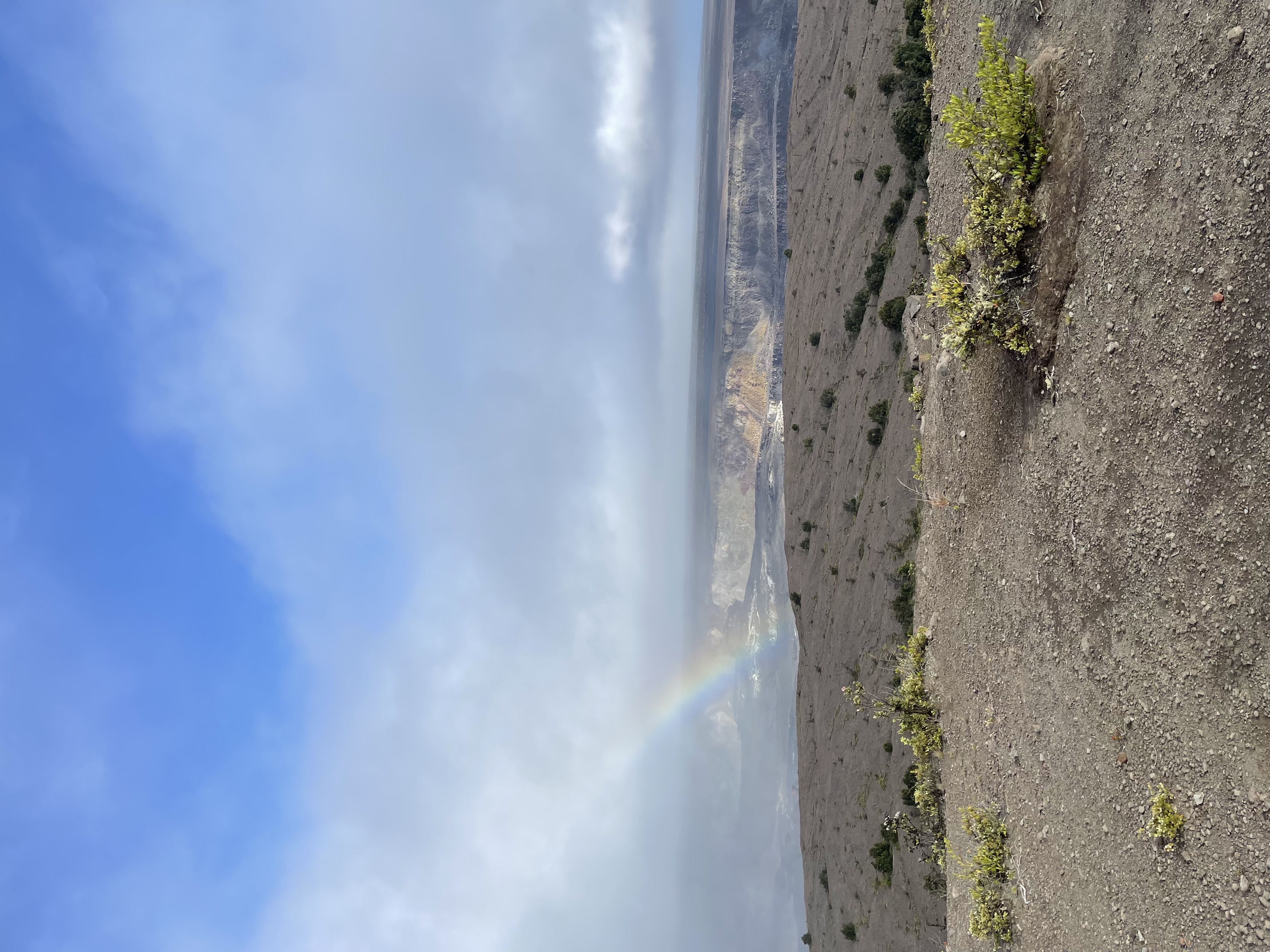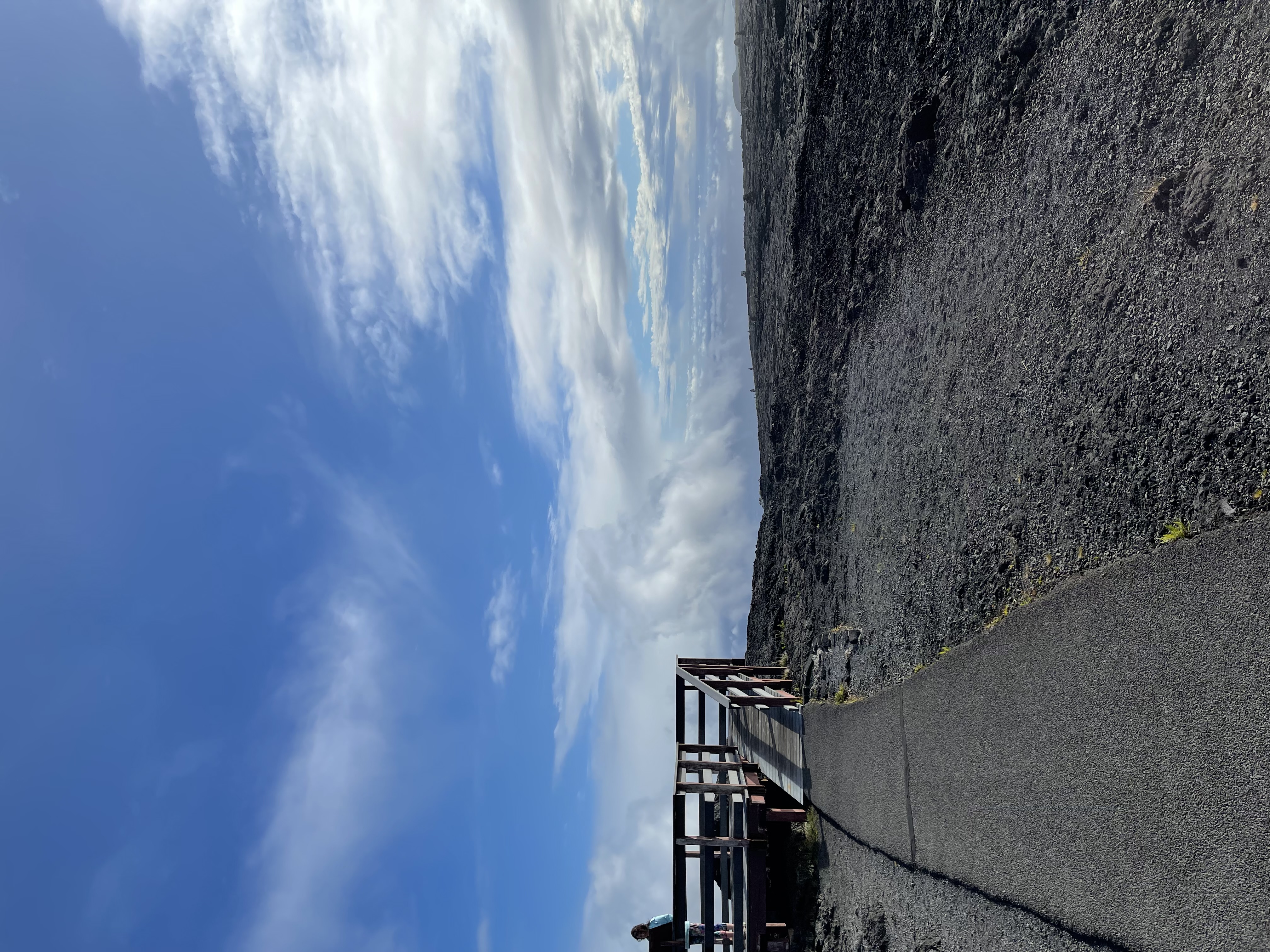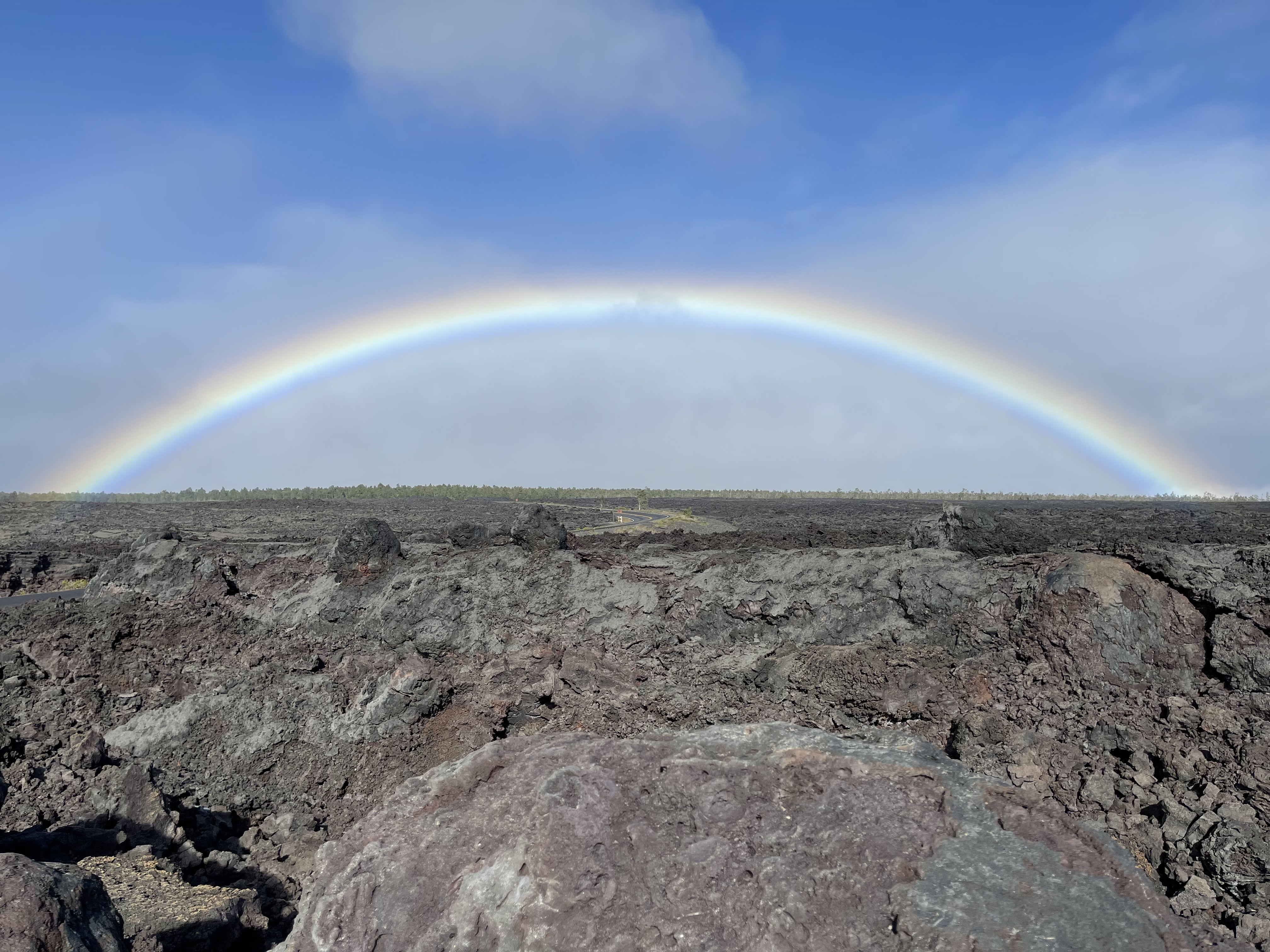

Hawaiʻi Volcanoes National Park is the reason most first-time Big Island visitors come to the Big Island. It is also the place people most often miscalculate: too little time, wrong layers, no plan for after dark. This guide is the practical version, what the park is, what it costs, what to see, and how to fit it into one realistic day.
What Hawaiʻi Volcanoes National Park actually is
The park protects two of the most active volcanoes on Earth, Kīlauea and Mauna Loa, along with 523 square miles of land that runs from summit to sea. Inside the boundary you will find a steaming summit caldera, walkable lava tubes, a 19-mile road that descends through old flow fields to the ocean, native rainforest, and high desert.
It is a UNESCO World Heritage Site and an International Biosphere Reserve, established in 1916 as the 13th national park in the United States. In a normal year it receives well over a million visitors, most of them in a single concentrated afternoon. Going early, staying late, or both is the simplest way to dodge the crowd.
Where it is and how to get there
The main entrance sits on Highway 11 in the village of Volcano, on the southeast side of the Big Island. Driving times from the major lodging hubs:
- Hilo: 30 miles, about 45 minutes.
- Kailua-Kona: 95 to 100 miles, 2 to 2.5 hours via the southern (Hwy 11) route, or 2.5 to 3 hours via the northern (Saddle Road) route.
- Waikoloa / Mauna Lani / Kohala Coast: 110 to 125 miles, 2.5 to 3 hours.
- Volcano Village lodging: 1 to 5 minutes.
The closest airport is Hilo (ITO), about 40 minutes away. Most resort visitors fly into Kona (KOA) instead and treat the park as a long day trip from the west side.
Hours, fees and the entrance
The park is open 24 hours a day, every day of the year. The standard entrance fee is $30 per private vehicle and covers seven consecutive days, so a second evening for the eruption glow does not cost extra. An America the Beautiful annual pass, a Hawaiʻi tri-park pass, or a Volcanoes annual pass also work.
Kīlauea Visitor Center, the best place to start, typically opens by 9:00 a.m. and closes in the late afternoon. Rangers there post the current overlook closures, air-quality readings and any ongoing eruption details. Always check those before committing to a viewing plan; closures shift with the wind.
The stops worth your time
You cannot do everything in one visit. These are the high-return stops in roughly the order you would hit them on a counter-clockwise loop from the entrance.
- Kīlauea Visitor Center: Get the ranger briefing and current closure map. Ten minutes here saves an hour of driving to a closed overlook.
- Volcano House & Crater Rim: A few steps from the visitor center, the historic Volcano House terrace gives the first wide view into Kīlauea caldera and Halemaʻumaʻu.
- Steam Vents and Sulphur Banks: Short paved walks through the geothermal vents that line the caldera rim. Wear a mask if you are sensitive to sulfur.
- Kīlauea Overlook and Uēkahuna: The classic west-rim views into Halemaʻumaʻu, often the best after-dark glow when the wind is favorable.
- Nāhuku (Thurston Lava Tube): A walkable lava tube through native rainforest. Cool, dim, and short.
- Kīlauea Iki Overlook: Top-down view of the 1959 eruption crater. The 4-mile trail across its floor is one of the best day hikes in the U.S. National Park system.
- Chain of Craters Road: A 19-mile, 38-mile round-trip drive that descends 3,700 feet through old flow fields to the coast at Hōlei Sea Arch. Plan two to three hours minimum.
- Puʻuloa Petroglyphs: A boardwalk over hundreds of Hawaiian rock carvings along Chain of Craters Road.
- Keanakākoʻi Overlook: Roughly a one-mile round-trip walk on closed road, often the best south-side view of eruption fountaining when one is active.
How to see the park in one day
A workable single-day plan from a Kona-side resort looks like this:
- 6:30 a.m.: Leave the resort. Coffee on the road.
- 9:00 a.m.: Arrive at the entrance, stop at Kīlauea Visitor Center for the closure map.
- 9:30 a.m. to 12:00 p.m.: Summit loop, Volcano House, Steam Vents, Kīlauea Overlook, Nāhuku Lava Tube, Kīlauea Iki Overlook.
- 12:00 to 1:00 p.m.: Lunch in Volcano Village.
- 1:00 to 5:00 p.m.: Drive Chain of Craters Road out and back, stopping at Puʻuloa Petroglyphs and Hōlei Sea Arch.
- 5:30 to 7:30 p.m.: Dinner in Volcano Village, then return to a summit overlook for the eruption glow if Kīlauea is active.
- 8:00 p.m. to midnight: Drive back to the resort.
That is a long day. If you have any flexibility in your itinerary, splitting the park across two days, or staying overnight in Volcano Village, is the higher-quality version.
What to wear and what to bring
The summit sits at about 4,000 feet of elevation. It is regularly 20 to 30 degrees cooler than the Kona coast and can be wet, windy or both. The most common visitor mistake is showing up in resort wear and freezing through the after-dark viewing window.
- Layers: A light fleece or jacket and long pants, even in summer. A rain shell for the rainforest side of the park.
- Closed-toe shoes: Trails are uneven lava rock. Sneakers or light hikers; no flip-flops.
- Headlamp or flashlight: Essential after sunset. Phone flashlights drain fast.
- Water and snacks: Food options inside the park are limited. Bring more water than you think you need.
- Refillable bottle: Filling stations at the visitor center.
- N95 or KN95 mask: Helpful around Steam Vents and Sulphur Banks for sensitive lungs.
Where to stay near the park
If the park is the centerpiece of your trip, stay at least one night in Volcano Village (small B&Bs and vacation rentals, walking distance to the entrance) or in Hilo (a 45-minute drive, more dining and lodging selection).
Most visitors instead anchor on the Kona or Kohala coast for sunshine and beaches and treat Hawaiʻi Volcanoes as a single long day trip. That works, but it is the version that needs the most planning and the most caffeine.
Self-driving versus going with a private guide
Self-driving the park works well when you are already staying on the east side and you do not mind navigating in the dark on the return. Rental car, $30 entrance fee, ranger briefing, and you can build your own pace.
A private chauffeured day, the version we run, makes more sense from the Kona or Kohala resorts. The driver knows the road, has real-time intel on which overlooks are open, and you can stay through dusk without anyone watching the clock. Pricing is per vehicle, not per person, which keeps it competitive for couples and families compared to large group coaches.