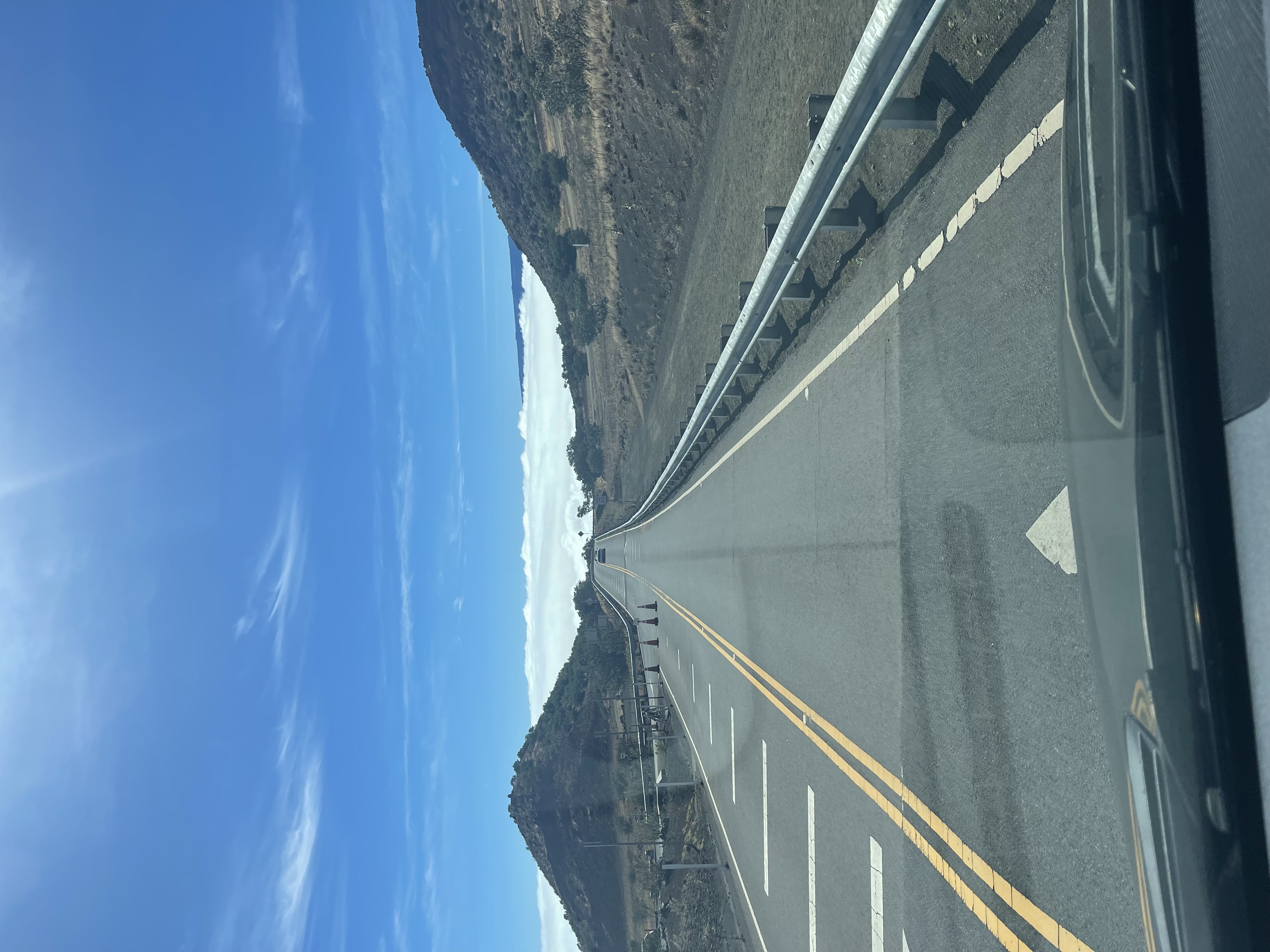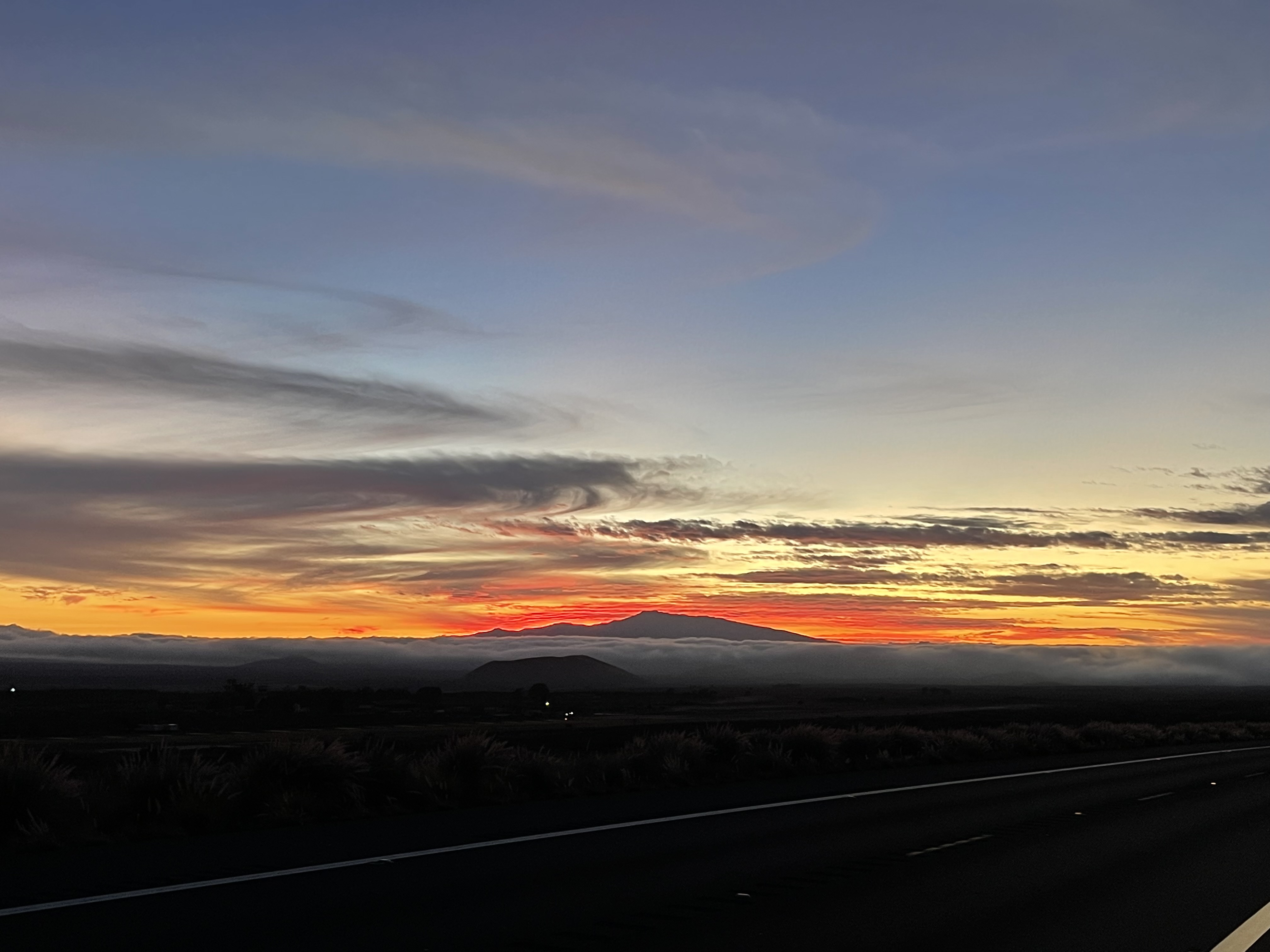
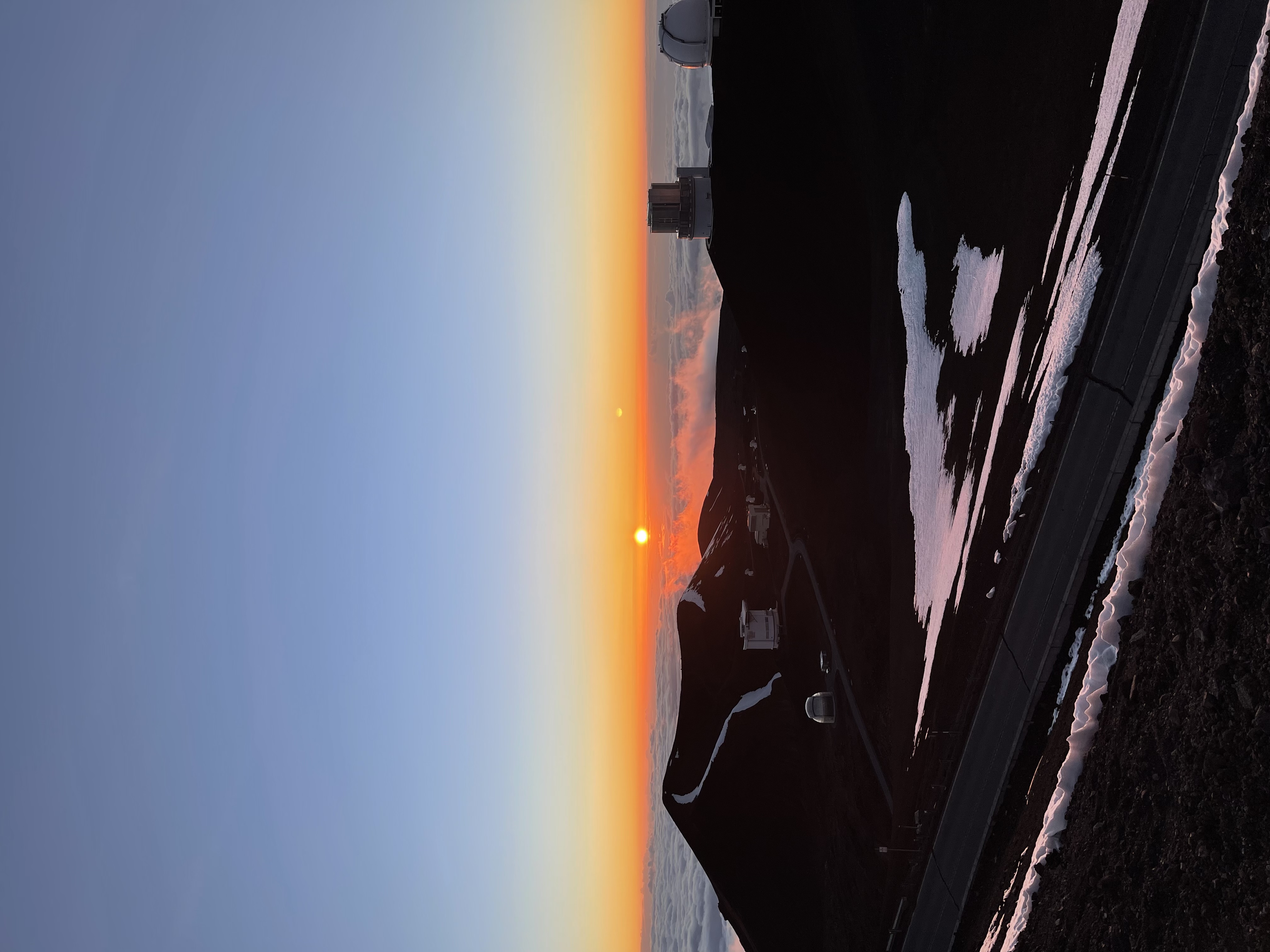
Mauna Kea is a different scale of place. The summit sits at 13,803 feet, almost a mile of vertical above any nearby ridge, and the air at the top holds roughly 60 percent of the oxygen you breathe at sea level. The mountain is home to thirteen of the world's most powerful telescopes, some of the darkest skies on Earth, and a deep cultural significance that visitors are asked to honor. This guide covers exactly how to visit: what is realistic for a half-day, what the visitor center delivers versus the summit, and how to do it safely.
What Mauna Kea actually is
Mauna Kea is a dormant shield volcano on the northern half of the Big Island. Its last eruption was roughly 4,500 years ago. The Hawaiian name translates to "white mountain" for the snow that caps the summit several times each winter.
Measured from its base on the Pacific Ocean floor to its summit, Mauna Kea is approximately 33,500 feet tall, which makes it the tallest mountain on Earth from base to peak, taller than Everest by roughly 4,500 feet. Measured from sea level, the summit sits at 13,803 feet, the highest point in the state of Hawaii and one of the highest oceanic summits anywhere.
Summit vs visitor center
Most visitors do not actually need to go to the summit. The decision comes down to what you want to experience.
- The visitor center (9,200 feet): Officially the Maunakea Visitor Information Station. Paved access via Saddle Road and the Mauna Kea Access Road. Restrooms, basic exhibits, informal evening stargazing programs run by volunteers most clear nights. This is where most independent visitors should stop. You still get the high-elevation sunset and a dark sky experience without the altitude or 4WD requirement.
- The summit (13,803 feet): Above the visitor center, the road becomes steep, partly unpaved, and requires 4WD low range. Almost all rental contracts prohibit it. The summit delivers the observatory cluster, an above-the-clouds sunset, and on clear nights a view of Kīlauea's glow to the south. Most visitors who reach the summit do so with a permitted guide.
Stargazing on Mauna Kea
Mauna Kea is one of the premier astronomical observation sites on Earth because of three combined factors: high elevation puts you above most of the atmosphere's water vapor, the mid-Pacific location keeps the night sky dark and free of light pollution, and stable trade-wind airflow produces unusually steady seeing conditions.
For visitors, the two real options are:
- Visitor center stargazing: On clear nights, volunteer astronomers typically set up telescopes outside the visitor center and run informal programs. Free, no booking, weather-dependent. Bring warm clothing.
- Guided summit and stargazing tour: A permitted operator drives you up for sunset at or near the summit, then descends to a designated stargazing location below the summit (telescopes are not operated at the summit itself out of respect for the working observatories). Includes parka loan, hot drinks, dinner, and instruction. Typical pricing runs $250 to $350 per person.
How to get there
From the Kohala coast resorts, the visitor center is about 1.5 hours by car via Saddle Road (Daniel K. Inouye Highway). From Kailua-Kona, plan on 2 hours. From Hilo, about 1 hour. Saddle Road itself is fully paved and well maintained, despite older guidebook warnings.
Above the visitor center, the Mauna Kea Access Road climbs 4,600 feet in 8 miles. The first few miles are unpaved and steep, often more than 15 percent grade. Standard rental SUVs and 2WD vehicles are not allowed past the visitor center. Rangers actively turn back unqualified vehicles.
Altitude and safety
Altitude is the real risk on Mauna Kea, more so than weather or terrain. Coming from sea level to 13,803 feet in a few hours is a serious physiological event. Standard guidance:
- Stop at the visitor center for at least 30 minutes to acclimatize.
- Drink water continuously throughout the day.
- Eat a light meal before the ascent.
- Skip alcohol the day of your visit.
- Descend immediately if you experience severe headache, vomiting, or confusion.
Mauna Kea is not recommended for: children under 16, pregnant travelers, anyone who has scuba dived within the last 24 hours, and travelers with heart, lung, or respiratory conditions. The visitor center is fine for most of these groups; the summit is not.
What to wear
Dress for a winter night, not a Hawaii vacation. Summit temperatures routinely sit between 25 and 50°F with biting wind. Even the visitor center after sunset can be in the 40s.
- Insulated jacket or parka (guided tours typically loan one).
- Long pants. No shorts.
- Beanie or warm hat, gloves, and a neck warmer.
- Closed-toe shoes with grip. Ice and frost are possible in winter.
- Sunglasses for the drive up. UV is intense at altitude.
- A small daypack with water and a snack.
Guided tour vs DIY
For the summit, a guided tour is effectively required unless you can bring a private 4WD vehicle that meets the requirements. For the visitor center alone, doing it yourself works well.
A guided summit and stargazing tour handles the 4WD permit issue, provides cold-weather gear, manages your altitude pacing, and gets you to the right viewpoints at the right time. The drawback is timing, since most tours run 7 to 8 hours and end late.
A self-guided visitor center evening is free, flexible, and still delivers an extraordinary night sky. The drawback is no summit access and no telescope-trained guide.
Cultural respect
Mauna Kea is one of the most sacred places in Native Hawaiian culture, considered the meeting place of earth and sky and the home of several deities. The summit area contains historic Hawaiian shrines that predate the observatories by centuries.
Practical visitor guidance:
- Stay on established roads and trails at all times.
- Do not climb the actual summit cone (Puʻu Wēkiu) out of respect.
- Do not leave offerings, build rock cairns, or remove rocks.
- Photograph respectfully and avoid drone use, which is prohibited.
- Keep voices low at the summit, especially near observatories operating at night.
Treated with care, Mauna Kea is one of the most unforgettable nights of a Big Island trip. It is also the kind of place that rewards travelers who plan a little and slow down a lot.