The Big Island's windward side gets more than 130 inches of rain a year. That rain feeds an entire system of waterfalls along the Hilo and Hāmākua coasts: short walks to 80-foot drops, paved loops past 442-foot plunges, and remote valley falls visible from cliff-top overlooks. This guide covers the falls actually worth your time, how to see the main three in a single morning, and the swimming question everyone asks before they go.
Why Hilo is the waterfall side
The Big Island has two completely different climates separated by the mass of Mauna Kea and Mauna Loa. The Kona side is dry desert and coastal resort country. The Hilo side catches the trade winds and the rain that comes with them. Every major Big Island waterfall is on the Hilo or Hāmākua coast for that reason.
If you are staying in Kona, plan a single east-side day rather than multiple short trips. The drive to Hilo via Saddle Road is about 2 hours each way; the Hāmākua coastal route via Waimea is closer to 2.5 hours but more scenic.
Rainbow Falls (Waiānuenue)
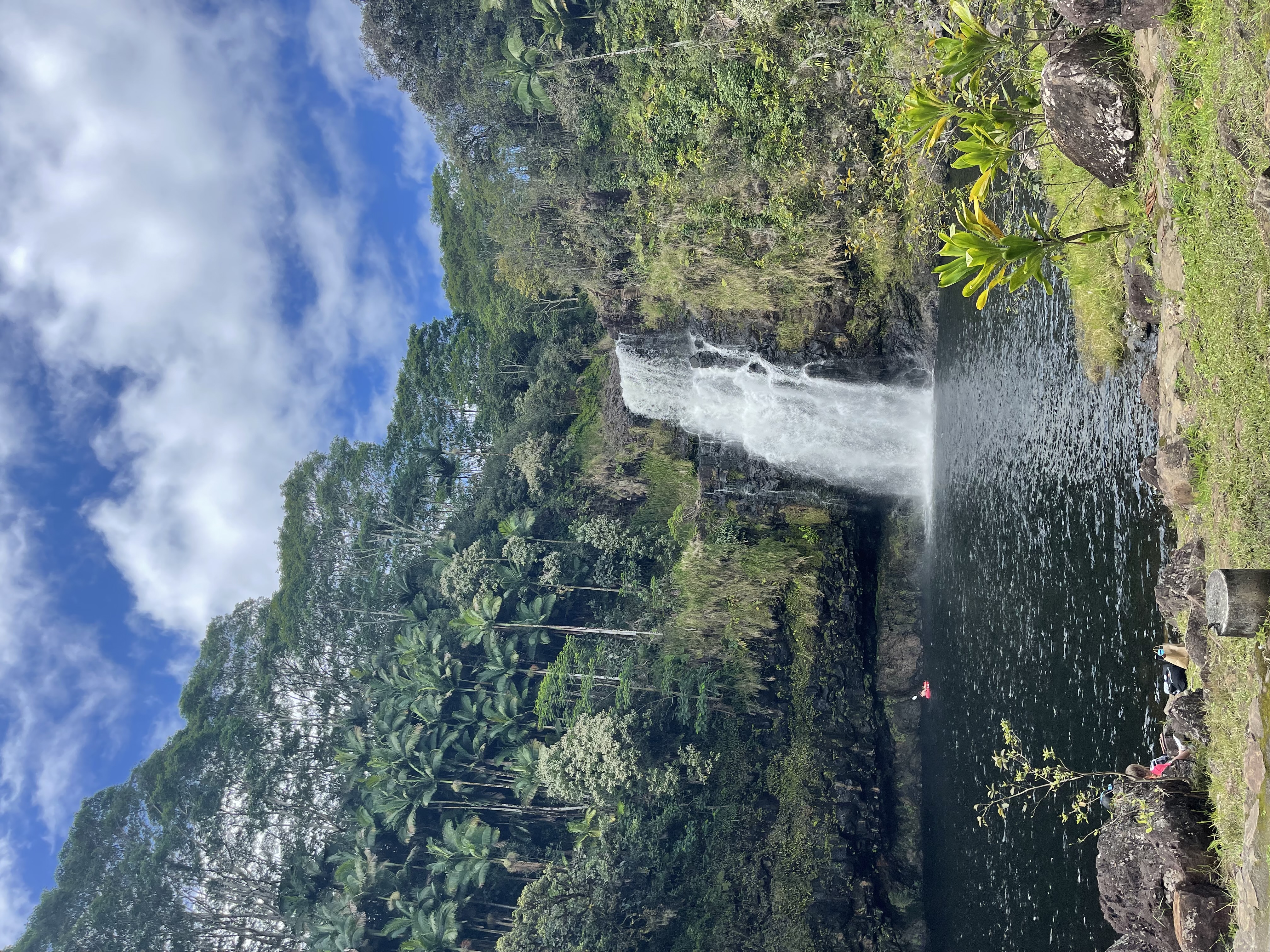
Rainbow Falls is the most famous and most accessible waterfall on the Big Island. The Hawaiian name Waiānuenue means "rainbow seen in water," a reference to the rainbows that form in the mist on sunny mornings.
- Height: 80 feet, with a wide curtain.
- Access: Free. Paved 2-minute walk from the parking area.
- Best time: 9 to 11 a.m. on a sunny morning for the rainbow effect.
- Swimming: Prohibited. Strong undercurrents and sacred site.
- Cultural note: The cave behind the falls is the legendary home of Hina, the mother of Maui in Hawaiian tradition.
A second, smaller overlook above the falls is a short stair climb from the main viewpoint. Most visitors miss it. The view from there shows the river flowing toward the lip and the city of Hilo beyond, which is worth the extra five minutes.
ʻAkaka Falls
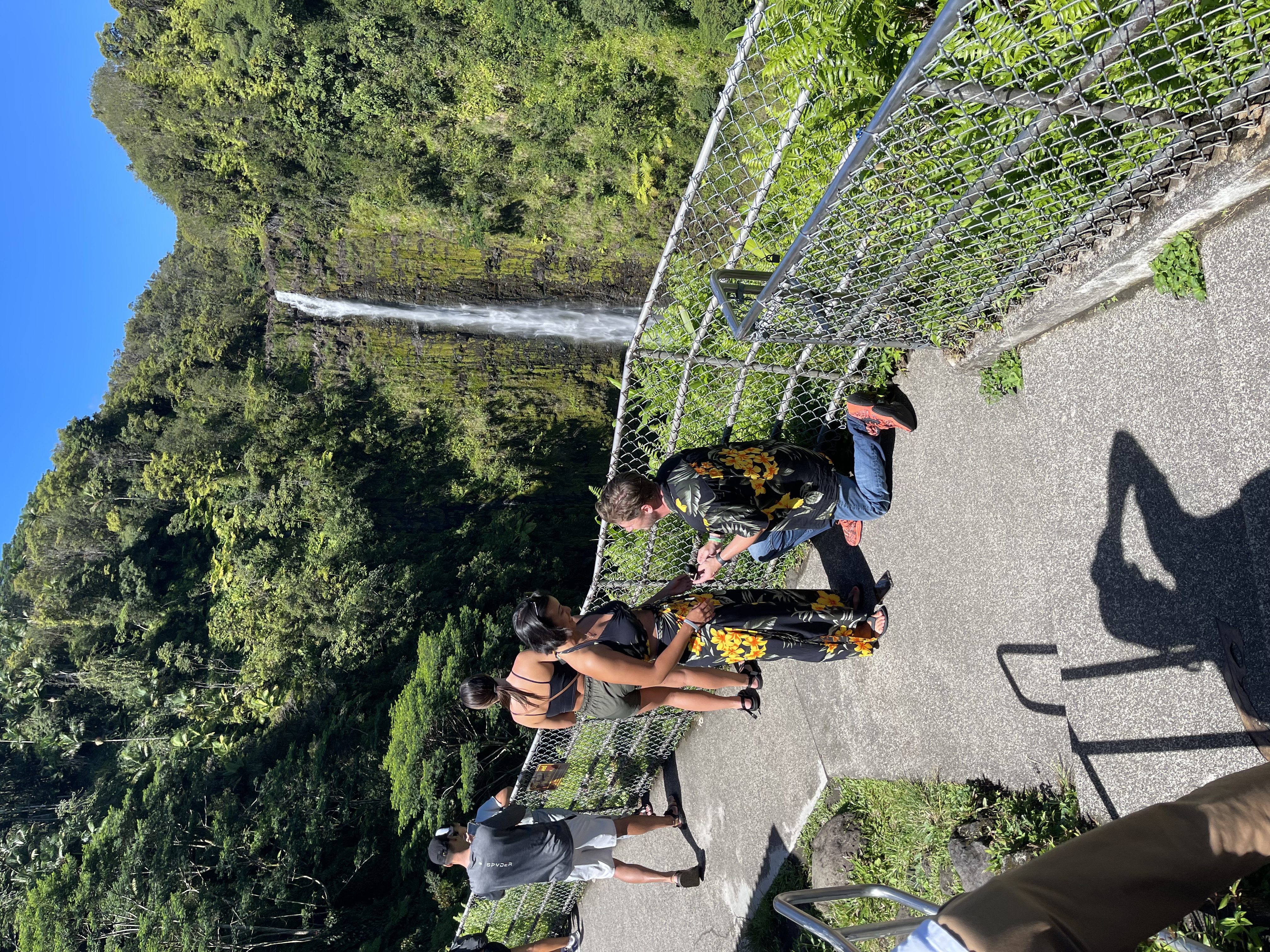
ʻAkaka Falls is the dramatic one: a single 442-foot plunge into a green gorge, viewed from a paved loop trail in ʻAkaka Falls State Park about 25 minutes north of Hilo. If you only see one waterfall on the Big Island, this is the one.
- Height: 442 feet, single plunge.
- Access: $5 per non-resident vehicle, $1 per non-resident pedestrian.
- Trail: Paved 0.4-mile loop, about 30 minutes. Some stairs.
- Best time: Morning for soft light in the gorge.
- Bonus: The loop also passes Kahuna Falls (about 100 feet) at a distance.
The full loop is one-way and easy to follow. Going counter-clockwise delivers the main ʻAkaka view earlier and a downhill finish, which most visitors prefer.
Peʻepeʻe Falls and Boiling Pots
Two miles upriver from Rainbow Falls, Peʻepeʻe Falls feeds a series of large round basins called Boiling Pots, where the Wailuku River churns between lava pools. After heavy rain the river runs so hard that the basins appear to boil.
- Access: Free. Short walk from the parking lot.
- Swimming: Prohibited and dangerous. Flash floods kill visitors here every few years.
- Best time: After recent rain for the dramatic boiling effect.
Easy to pair with Rainbow Falls in a single 45-minute stop. The two sites are part of the same Wailuku River system.
ʻUmauma Falls and Kahuna Falls
ʻUmauma is a three-tiered waterfall on private land about 30 minutes north of Hilo, accessed through the ʻUmauma Experience. The site offers a paid viewing platform, a permitted swim experience in the lower pool, zipline tours, and botanical gardens. It is one of the few legal waterfall swims on the Big Island.
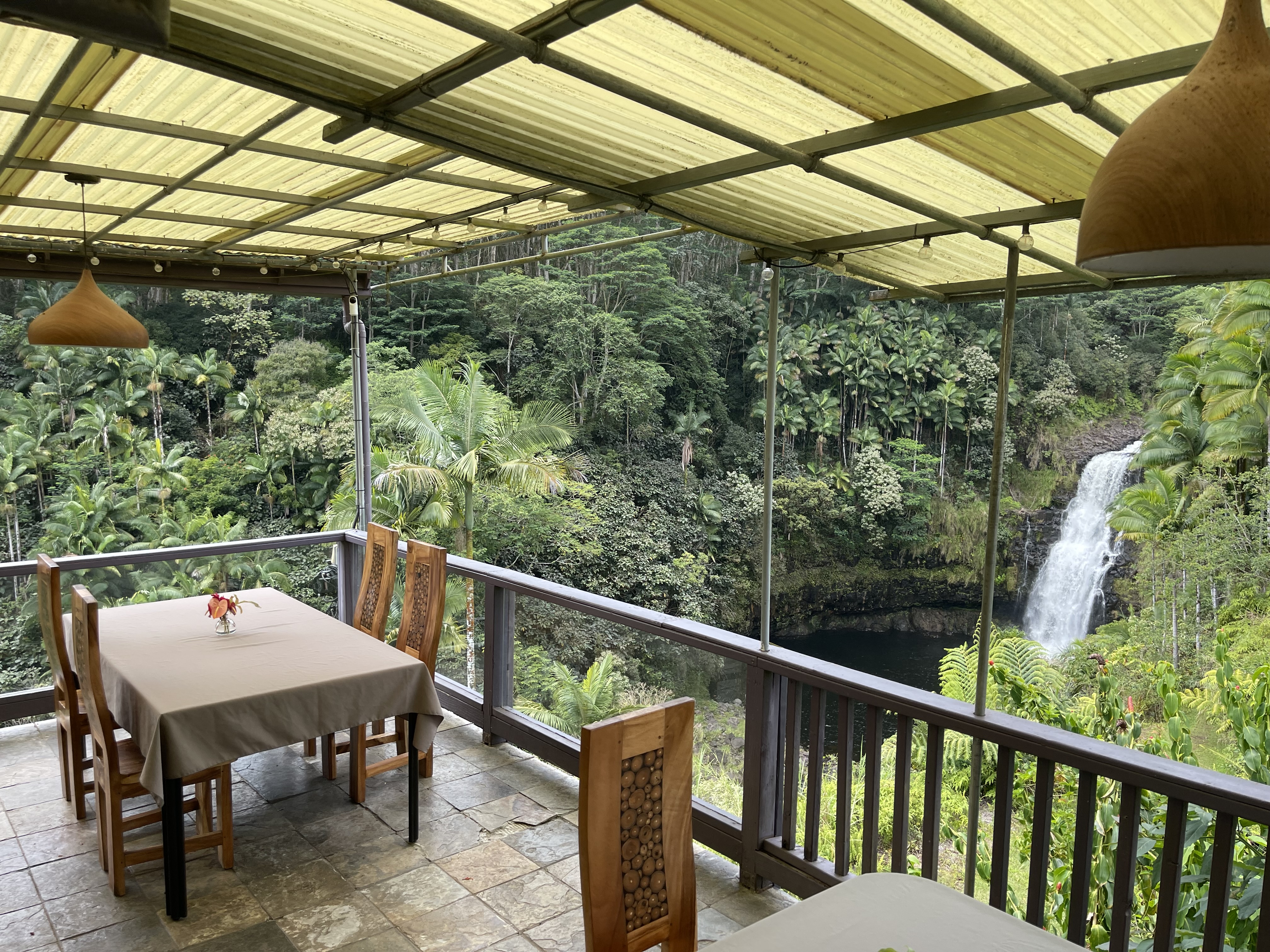
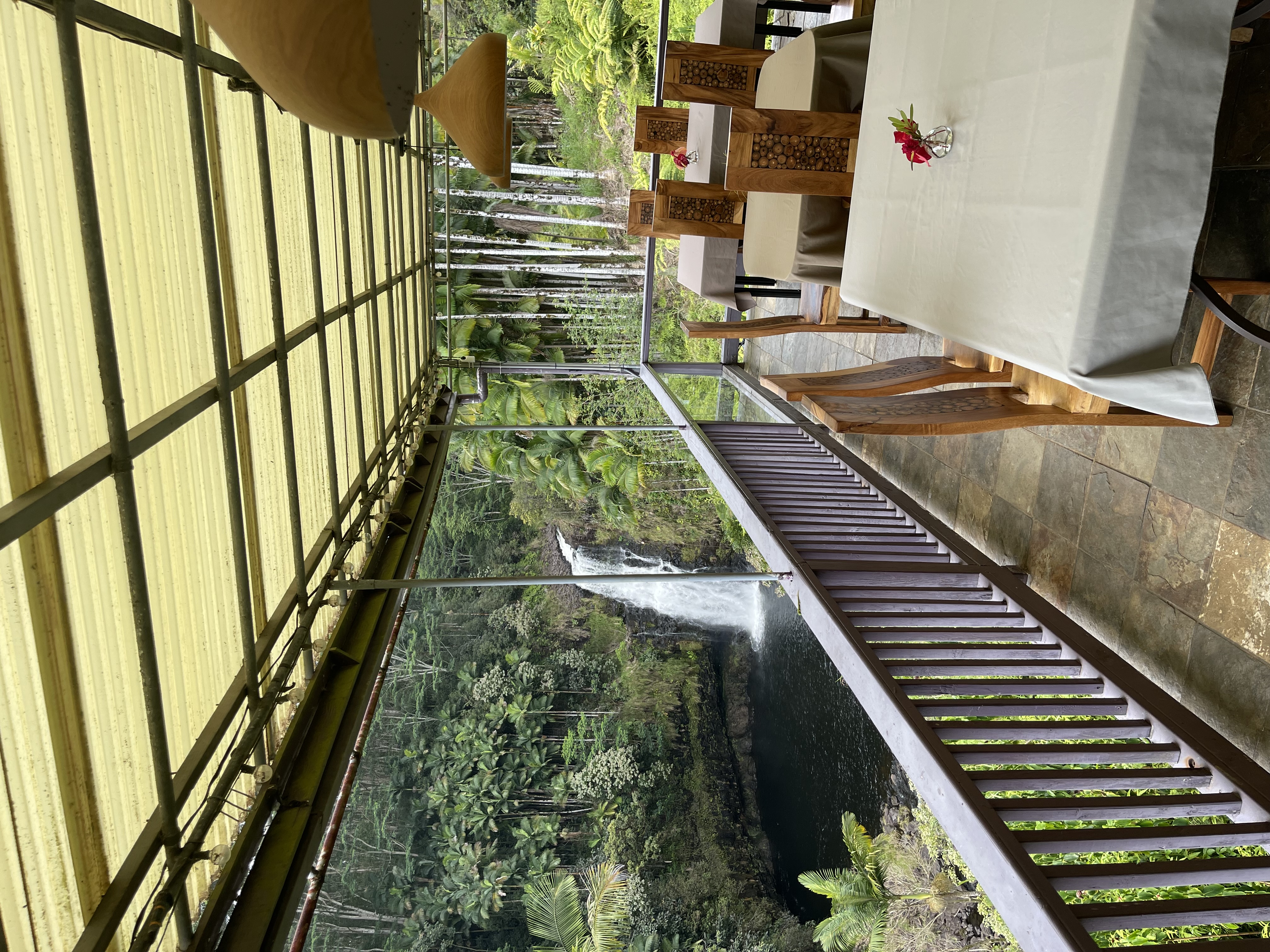
Kahuna Falls is visible from the ʻAkaka Falls loop and from one viewing area along the Hāmākua coast. There is no separate access trail.
Waipiʻo Valley waterfalls
Waipiʻo Valley on the northern Hāmākua coast contains Hiʻilawe Falls, one of the tallest waterfalls in Hawaii at roughly 1,450 feet. The valley overlook is free and stunning. Access into the valley itself has been restricted to residents and permitted operators since 2022 to protect cultural sites and address road safety.
Plan to view the valley from the overlook only. The drive in is no longer accessible to general visitors, and the road is one of the steepest paved public roads in the United States.
Best time to see waterfalls
Big Island waterfalls run year-round on the Hilo side. Flow does increase after rain, but the headline falls (Rainbow, ʻAkaka, Peʻepeʻe) do not depend on storms to be impressive. A few timing notes:
- Morning is best. Better light in the gorges, fewer cruise ship crowds at Rainbow Falls.
- After rain. Peʻepeʻe and Boiling Pots are most dramatic following recent storms.
- Avoid right after heavy storms. Access roads can flood or close, and stream conditions become dangerous.
- Dry months (May to October). Slightly lower flow but the trails stay clean and parking is easier.
Can you swim in the waterfalls?
For almost every public-access Big Island waterfall, the answer is no. Rainbow Falls, Peʻepeʻe, Boiling Pots, and ʻAkaka all prohibit swimming. The reasons are real:
- Flash floods. Rain miles upstream can send a wall of water through the gorge in minutes, with no warning at the falls.
- Leptospirosis. A bacterial infection present in many Hawaiian freshwater pools. Symptoms can be severe.
- Falling debris. Cliff rock and tree limbs come down regularly above pool bases.
- Cultural respect. Several pools are sacred and entry is offensive to Native Hawaiian tradition.
The legal options for actually swimming under a waterfall are limited to private experiences like the ʻUmauma Experience, which control upstream conditions and water quality.
One-day waterfall itinerary
This is the route most of our guests use to see the headline falls in one day, paired with lunch and a black sand beach or volcano stop:
- 8:30 a.m. Rainbow Falls in central Hilo. Upper overlook included.
- 9:15 a.m. Peʻepeʻe Falls and Boiling Pots, two miles upriver.
- 10:00 a.m. Drive north along the Hāmākua coast.
- 10:45 a.m. ʻAkaka Falls State Park loop.
- 12:00 p.m. Lunch in Hilo or at a Hāmākua coast roadside spot.
- 1:30 p.m. Continue to Volcanoes National Park or south to Punaluʻu.
From a Kona base, leave by 6 a.m. to make this work as a single day. From Hilo or Volcano Village, the morning runs much shorter and you have more flexibility in the afternoon.