
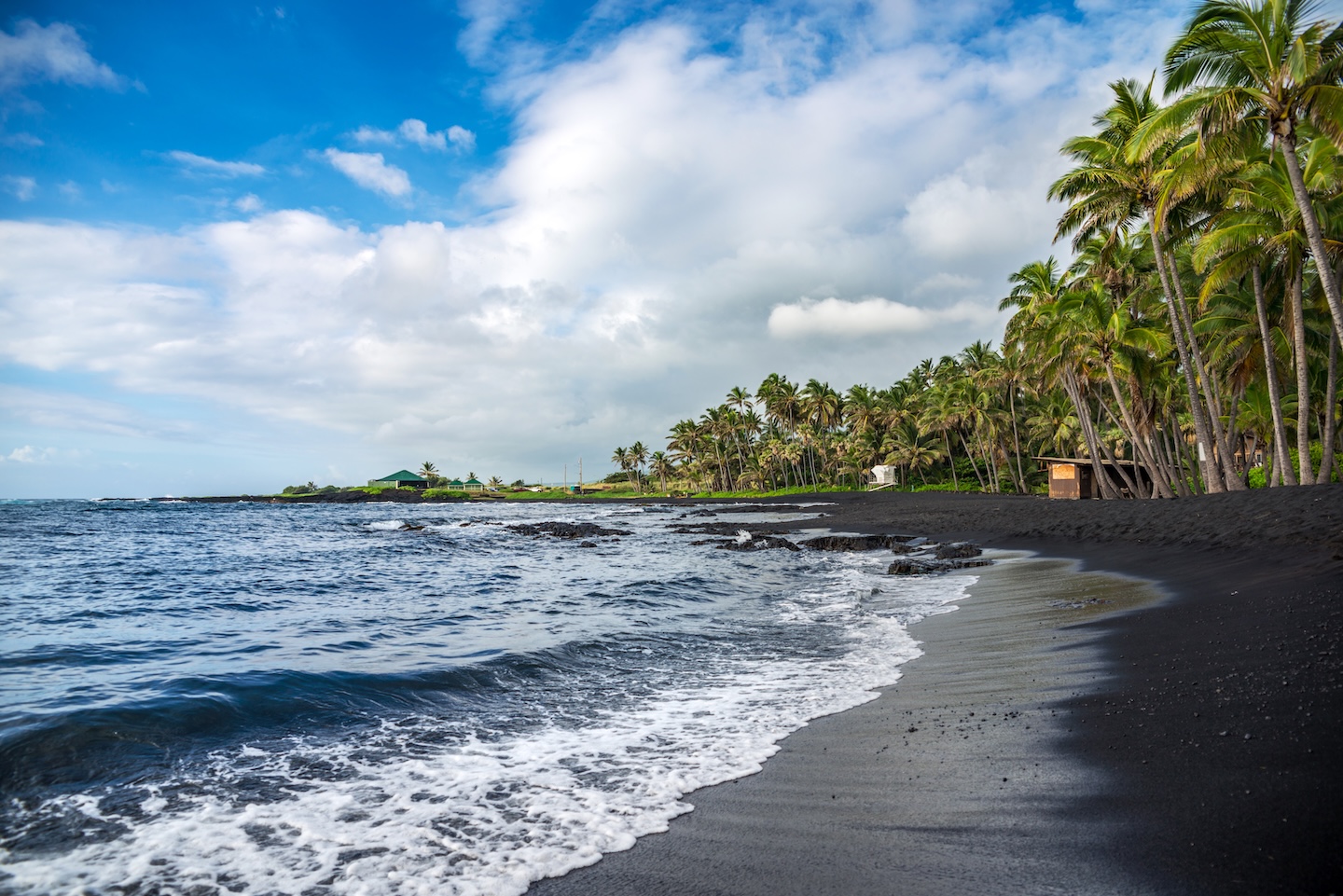
Black sand beaches are a signature feature of the Hawaiian Islands, particularly Hawai‘i Island. These striking shores are not merely dark-colored sand; they are vibrant, dynamic landscapes, direct products of the islands’ ongoing volcanic genesis. The process is a fascinating interplay of heat, pressure, and the Pacific Ocean.
At its core, the formation of a black sand beach begins with volcanic eruptions. Molten basaltic lava, typically flowing from Kīlauea Volcano, pours into the cool ocean. The sudden temperature differential causes the lava to shatter explosively into tiny fragments. These glassy, dark-colored particles, along with coarser rock fragments, are then subjected to the relentless power of ocean waves.
Over time, these fragments are eroded, rounded, and carried ashore by currents and surf. This constant pulverizing action grinds them into the fine, dark sand that creates these unique beaches. The abundance of volcanic activity on Hawai‘i Island, coupled with its exposed coastline, provides the ideal conditions for these ephemeral geological marvels.
The Anatomy of a Black Sand Beach
The composition of black sand is primarily basalt, a dark, fine-grained volcanic rock rich in iron and magnesium. This mineral content gives the sand its distinctive deep black hue. While often appearing uniformly dark, a closer look reveals a spectrum of shades, from charcoal gray to iridescent obsidian, depending on the specific lava flow and its subsequent weathering.
These beaches are dynamic, constantly being reshaped by new lava flows and ocean forces. Unlike typical quartz-based sands found in many parts of the world, black sand is heavier and often coarser. This can create a unique tactile experience underfoot, distinct from the fine, white sands of coral beaches.
Why Hawai‘i Excels in Black Sand Formation
Hawai‘i Island stands apart in its concentration and pristine examples of black sand beaches, largely due to its geological youth and vigorous volcanism. Kīlauea, one of the world's most active volcanoes, has been consistently erupting for decades, providing a steady supply of fresh lava to the coastline. This constant renewal is key to the prevalence of black sand here.
In contrast, older volcanic islands often have black sand beaches that are dwindling, as new lava flows cease and existing sand is gradually replaced by marine sediments or eroded away. On Hawai‘i Island, the balance between creation and erosion is often tipped in favor of creation, particularly in areas like Puna, where recent eruptions have dramatically reshaped the coast.
Other factors contributing to Hawai‘i's black sand dominance include:
- Basaltic Lava: The specific composition of Hawai‘i's shield volcanoes produces basaltic lava, which when fragmented, yields the ideal dark, dense material for black sand.
- Steep Coastal Profile: The island's relatively steep nearshore profile allows lava to flow directly into deep ocean waters, maximizing fragmentation.
- Powerful Pacific Swells: The relentless energy of the Pacific Ocean provides the constant mechanical action necessary to break down lava fragments into sand-sized particles and transport them to shore.
Famous Black Sand Beaches on Hawai‘i Island
Exploring Hawai‘i Island's black sand beaches offers a unique perspective on the island's raw power and beauty. Each location tells a story of volcanic creation and oceanic artistry.
Punalu‘u Black Sand Beach
Perhaps the most iconic black sand beach globally, Punalu‘u is nestled between Pāhala and Na‘alehu on the southeastern coast. It's easily accessible via a short turn off Highway 11. Here, large green sea turtles (honu) often bask on the heated sands, drawn by the warmth. The coconut palms lining the shore provide a stark contrast to the jet-black sand, making for stunning photography. While swimming is possible, strong currents are often present.
Kehena Black Sand Beach
Located in the Puna district, off Highway 137 (the "Red Road"), Kehena is a more secluded and popular spot among locals. It's known for its consistent waves and occasional spinner dolphin sightings. Access requires navigating a steep, rocky path, but the reward is a beautiful, intimate black sand crescent. Note that Kehena is clothing-optional, so be prepared for a diverse crowd.
Kaimū Beach (New Formation)
In the Puna district, the original Kaimū Beach was famously buried by the 1990 lava flow. Today, a new black sand beach has emerged from subsequent lava flows in the same area. It’s a powerful testament to the island's continuous rebirth. While rugged and not suitable for swimming, this nascent beach allows visitors to witness geological processes in real-time.
Kalapana-Kaimū area
This entire stretch of coastline, particularly the areas impacted by the 2018 eruption, offers compelling views of new black sand formations. While many access points remain undeveloped or privately owned, guided tours can sometimes provide safe and respectful access to areas where newly formed black sands are evident. The journey along Highway 130 and 137 through this region is a journey through recent geological history.
Preserving These Natural Wonders
Black sand beaches are fragile ecosystems. Many are home to endangered species, such as the green sea turtle. Visitors are encouraged to observe wildlife from a distance, never touch the sand, rocks, or any natural features, and always pack out everything they pack in. Removing sand or rocks is forbidden by state law and takes away from these unique environments. Consider exploring these areas with a knowledgeable guide who can ensure a respectful visit while offering deeper insights into the geology and culture.
For an unparalleled exploration of Hawai‘i Island's geological wonders, including these spectacular black sand formations, consider a private, customizable tour tailored to your interests. Our expert guides navigate the diverse landscapes, providing context and convenience, away from the crowds. Learn more about our island tours at High-End Hawaii: Big Island Private Tours.
The High-End Hawaii Take
Hawai‘i Island’s black sand beaches are more than just beautiful—they are living laboratories where Earth's raw power is visibly at work. They offer a tangible connection to the volcanic forces that continue to shape this youngest of islands, creating landscapes that are both stunning and profoundly awe-inspiring. They embody the essence of discovery and natural wonder that defines a luxury Big Island experience. To understand how black sand beaches form is to appreciate the dynamic heartbeat of our island.
Keep going