
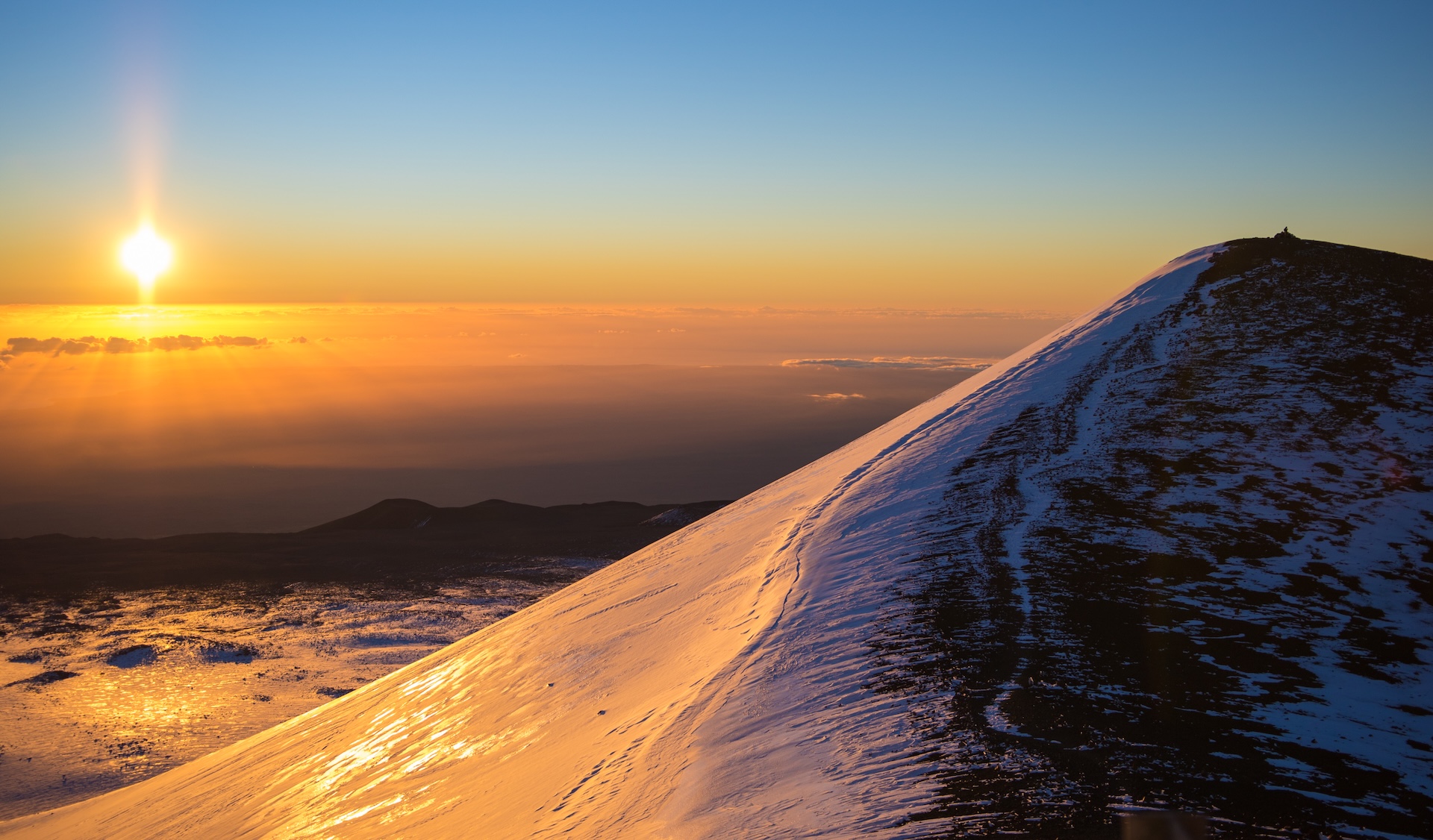
Is Mauna Kea taller than Mount Everest? The answer is a resounding yes, provided you measure from the correct starting point. While Everest's summit boasts the highest elevation above sea level globally, Mauna Kea claims the title of the world's tallest mountain when measured from its true base on the ocean floor.
This distinction highlights a fundamental difference in mountain geography. Everest, rising majestically from the Himalayan plateaus, is undoubtedly the "roof of the world" in terms of its prominence above the land around it. Mauna Kea, however, is a colossal shield volcano, with a significant portion of its structure submerged beneath the Pacific Ocean.
The Numbers: Peak vs. Base-to-Summit
Let's break down the measurements to understand this fascinating comparison:
- Mount Everest: Its summit reaches an impressive 29,031.7 feet (8,848.86 meters) above sea level. This is the widely recognized figure, earning it the conventional title of the world's highest peak.
- Mauna Kea: Its summit stands at 13,803 feet (4,207 meters) above sea level. This elevation makes it the highest point in Hawaiʻi and the second-highest island peak on Earth.
The real story unfolds when you consider Mauna Kea's submerged mass. From its base on the ocean floor, approximately 19,700 feet (6,000 meters) deep, Mauna Kea soars upward. Adding its above-sea-level height to its submerged depth, the total height of Mauna Kea from base to summit is roughly 33,500 feet (10,210 meters). This makes Mauna Kea taller than Mount Everest by over 4,000 feet when measured from its true geological foundation.
A Geological Marvel: Mauna Kea's Formation
Mauna Kea is an inactive shield volcano, one of five volcanoes that form the Big Island. Its massive size is a testament to millions of years of volcanic activity. Unlike the steeper, more explosive stratovolcanoes, shield volcanoes like Mauna Kea are built by countless flows of highlyfluid lava, creating broad, gently sloping profiles. Over time, these flows accumulate, eventually breaking the surface of the ocean and continuing to grow into the colossal mountain we see today.
The volcano's immense weight has caused the ocean floor around it to subside, further emphasizing its sheer scale. Its long dormant status, with the last eruption estimated around 4,600 years ago, has allowed erosion to shape its slopes, but its fundamental structure remains immense.
More Than Just Height: The Mauna Kea Experience
Beyond its impressive statistics, Mauna Kea offers an unparalleled experience. It's home to the world's largest astronomical observatory, a collection of cutting-edge telescopes operated by a dozen different countries. The summit's high altitude, dry atmosphere, and minimal light pollution create some of the best stargazing conditions on Earth. While the observatories themselves are not open to the public for tours, visitors can witness them from designated viewing areas.
The journey to the summit is an adventure in itself. The Mauna Kea Summit Road, accessible to 4x4 vehicles only beyond the Visitor Information Station (VIS) at 9,200 feet, takes you through diverse climate zones. From sea level, you'll traverse lush coastal plains, dry ranchlands, and eventually ascend into a subalpine environment, often seeing snow near the summit during winter months. It's a stark contrast to the tropical beaches below.
Preparing for the Ascent
Visiting Mauna Kea's summit requires careful planning and respect for its unique environment:
- Altitude Sickness: The extreme altitude can cause acute mountain sickness. Guests are advised to spend at least 30 minutes at the VIS to acclimate.
- Vehicle Requirements: Beyond the VIS, the road is unpaved and steep. A 4-wheel drive vehicle with low range is mandatory. Many rental car agreements prohibit driving to the summit.
- Weather: Conditions can change rapidly, with temperatures often below freezing and high winds. Proper layers are essential.
- Sun Protection: The thin atmosphere means intense UV radiation. Sunscreen, hats, and sunglasses are critical.
- Hours: For environmental and safety reasons, the summit is generally closed after sunset for descent (except for observatory personnel).
- Cultural Significance: Mauna Kea is a sacred place for Native Hawaiians. Visitors are asked to be respectful of its cultural importance.
Our comprehensive guide to Mauna Kea offers more in-depth information, including detailed directions, safety precautions, and respectful practices for your visit.
The High-End Hawaii Advantage
Navigating the Mauna Kea Summit Road, understanding the nuanced conditions, and ensuring a safe and comfortable experience is best done with local expertise. With High-End Hawaii, your private luxury tour of Mauna Kea ensures a seamless and enriching journey. We handle the specialized 4x4 transport, provide an expert guide to explain the geology and cultural significance, and ensure all safety protocols are meticulously followed, allowing you to focus on the truly awe-inspiring vistas and celestial wonders. From the moment we pick you up at your Big Island accommodation, to the stunning sunset and stargazing experience (conditions permitting), we craft an unparalleled adventure. Talk with our team about a custom Mauna Kea Summit & Stars experience by calling +1 (808) 204-4745 or learn more about a full-day custom Big Island journey by exploring our Big Island Private Tours.
The High-End Hawaii Take
Mauna Kea stands as a testament to the sheer power and scale of natural forces. Its designation as the world's tallest mountain from base to summit is a remarkable geological fact that often surprises visitors. Experiencing its majestic presence, whether from the mid-slopes for stargazing or venturing to its hallowed summit, offers a profound connection to both Earth and the cosmos. It's an essential Big Island experience, representing the island's unique blend of active geology, astronomical innovation, and deep cultural heritage. LESS CROWD. MORE WOW.
Keep going