
When planning a visit to Hawaiʻi Volcanoes National Park, the essential question is: Kīlauea vs Mauna Loa, which volcano should you see? The answer depends entirely on what you hope to experience. Both are classified as active volcanoes, but their current behavior is vastly different, shaping your visit in distinct ways.
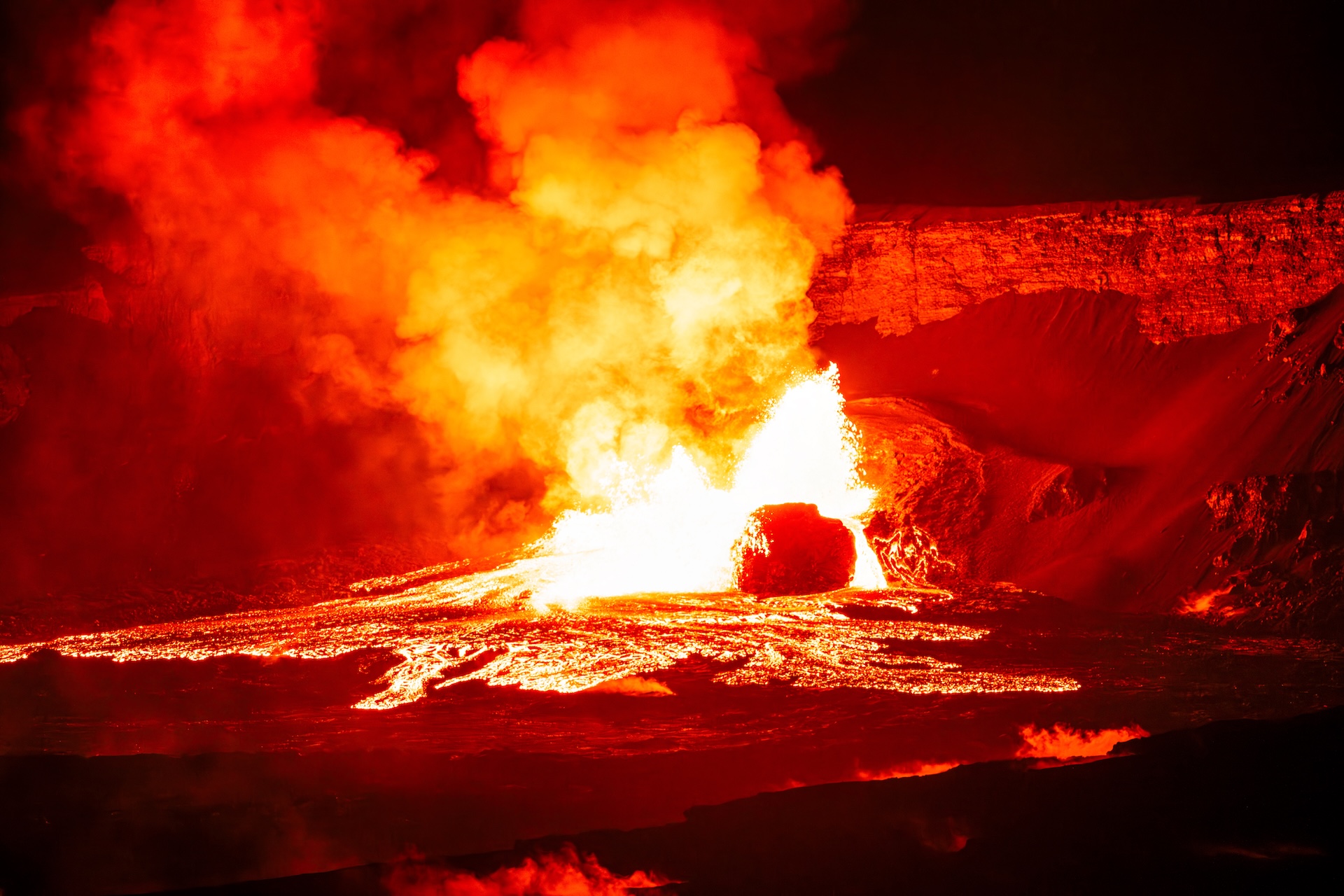
As of now, Kīlauea is the star of the show, with ongoing eruptive activity contained within Halemaʻumaʻu crater at its summit. This provides the dramatic glow and visible signs of Pele’s power that most visitors seek. Mauna Loa, despite its recent, brief eruption in late 2022, is currently quiet. It offers a sense of scale and solitude, but not the fiery spectacle of its neighbor.
Ultimately, the choice isn’t about which volcano is “better,” but which aligns with your vision for the day. For most, Kīlauea is the undeniable destination for seeing an active volcano in real-time.
Kīlauea: Hawaiʻi’s Most Reliably Active Volcano
Kīlauea is one of the most active volcanoes on Earth. Its activity, for now, is centered at the summit within Halemaʻumaʻu crater. This is a dramatic change from the pre-2018 era, when lava flows often reached the sea. The 2018 lower Puna eruption reshaped the landscape and the volcano itself, causing the summit crater to collapse and form a much larger, deeper caldera.
Since 2020, new eruptions have been working to fill this caldera, creating a lava lake that periodically crusts over and re-emerges. For visitors, this means the most compelling spectacle happens after dark. The molten rock beneath the surface creates a brilliant, mesmerizing glow that illuminates the clouds of gas and the night sky. Viewing this from the Uēkahuna overlook or other points along Crater Rim Trail is a core Big Island experience.
What You Can See at Kīlauea
- The Summit Caldera: A vast, two-mile-wide depression that is humbling to witness day or night.
- Halemaʻumaʻu Crater: The active heart of Kīlauea. By day, you’ll see gases and steam venting; by night, the famous lava glow.
- Steam Vents (Wahinekapu): Groundwater seeping down to hot volcanic rocks creates plumes of steam. It’s a sensory experience and a constant reminder of the heat below.
- Kīlauea Iki Crater: Site of a spectacular 1959 eruption, you can now hike across the solidified but still-steaming crater floor.
Mauna Loa: The Sleeping Giant’s Sheer Scale
Mauna Loa translates to “Long Mountain,” a name that barely does justice to its size. It’s the largest active volcano on the planet, making up more than half of the Big Island's landmass. Its gentle, shield-like slopes disguise its immense volume. To stand on it is to feel insignificant against the backdrop of geology at its grandest.
Its eruptions are less frequent than Kīlauea's but tend to be far more voluminous. The November-December 2022 eruption was a powerful reminder of this, sending lava flows down the northern flank, visible from miles away. Now, however, the mountain is quiet. The fissures from that event are cooling, and there is no surface activity. While it's constantly monitored for signs of unrest, a visit to Mauna Loa today is about appreciating its scale, not seeing lava.
Accessing Mauna Loa
Experiencing Mauna Loa is a different commitment. The Mauna Loa Scenic Drive is a 17-mile, steep and narrow paved road that climbs to an overlook at 6,662 feet. It's a beautiful, solitary drive through historic lava flows. The road to the true summit at 13,679 feet is a rugged, unpaved trail requiring a high-clearance 4x4 and serious preparation for high-altitude conditions. For nearly all visitors, the scenic drive is the most practical way to experience the mountain.
A Tale of Two Experiences: Accessibility and Views
Your visit to Hawaiʻi Volcanoes National Park will feel like exploring two different worlds, even though they exist side-by-side. The summits of Kīlauea and Mauna Loa are only 21 miles apart, but the experience at each is unique.
Kīlauea is about accessibility and immediacy. The main attractions are clustered around the Kīlauea Visitor Center. You can park and walk just a few hundred feet to the main overlook at Uēkahuna. Key roads like Crater Rim Drive and Chain of Craters Road are well-maintained. A comprehensive visit here involves:
- Driving the 19-mile Chain of Craters Road down to the coast.
- Walking short, paved trails to overlooks.
- Experiencing a diverse landscape, from lush rainforests to barren lava fields.
Mauna Loa is about solitude and immensity. There are no visitor centers or ranger stations along the Mauna Loa Scenic Drive. The experience is quieter, more introspective. It's about witnessing the raw, stark beauty of a massive shield volcano and understanding your place within that scale. The views are vast, panoramic, and feel profoundly empty compared to the relative bustle of the Kīlauea summit.
For a deeper dive into navigating the park, our guide to Hawaiʻi Volcanoes National Park provides essential planning details.
The Unpredictable Nature of Pele
Volcanic activity in Hawaiʻi is fluid and unpredictable. An eruption can begin with little warning, and existing activity can pause at any time. The U.S. Geological Survey (USGS) and National Park Service (NPS) provide daily updates, which are essential for planning.
This constant change is part of the allure. But it also presents a challenge for visitors trying to maximize their time. Knowing where to go, when to be there for the best light, and how to interpret the subtle signs of the landscape requires deep local knowledge. Parking can be extremely limited during periods of high activity, especially for evening glow viewing. Having a guide who can navigate these logistics transforms the experience from stressful to sublime.
Navigating this dynamic environment, from timing a visit for the best glow to understanding the cultural context of Pele, is where local expertise is invaluable. For those seeking a seamless and profound connection with the landscape, a private volcano tour eliminates the guesswork and logistical stress, allowing you to simply be present in this powerful place.
The High-End Hawaii Take
For an active, fiery spectacle, Kīlauea is your destination. For a humbling sense of geological scale and solitude, Mauna Loa delivers. Both tell a part of Hawaiʻi's story. A successful visit isn't about rushing to see everything; it’s about understanding what you are seeing and why it matters. By focusing your time and navigating with intention, you move beyond the checklist and into a real encounter with one of Earth's most formative processes. LESS CROWD. MORE WOW.