
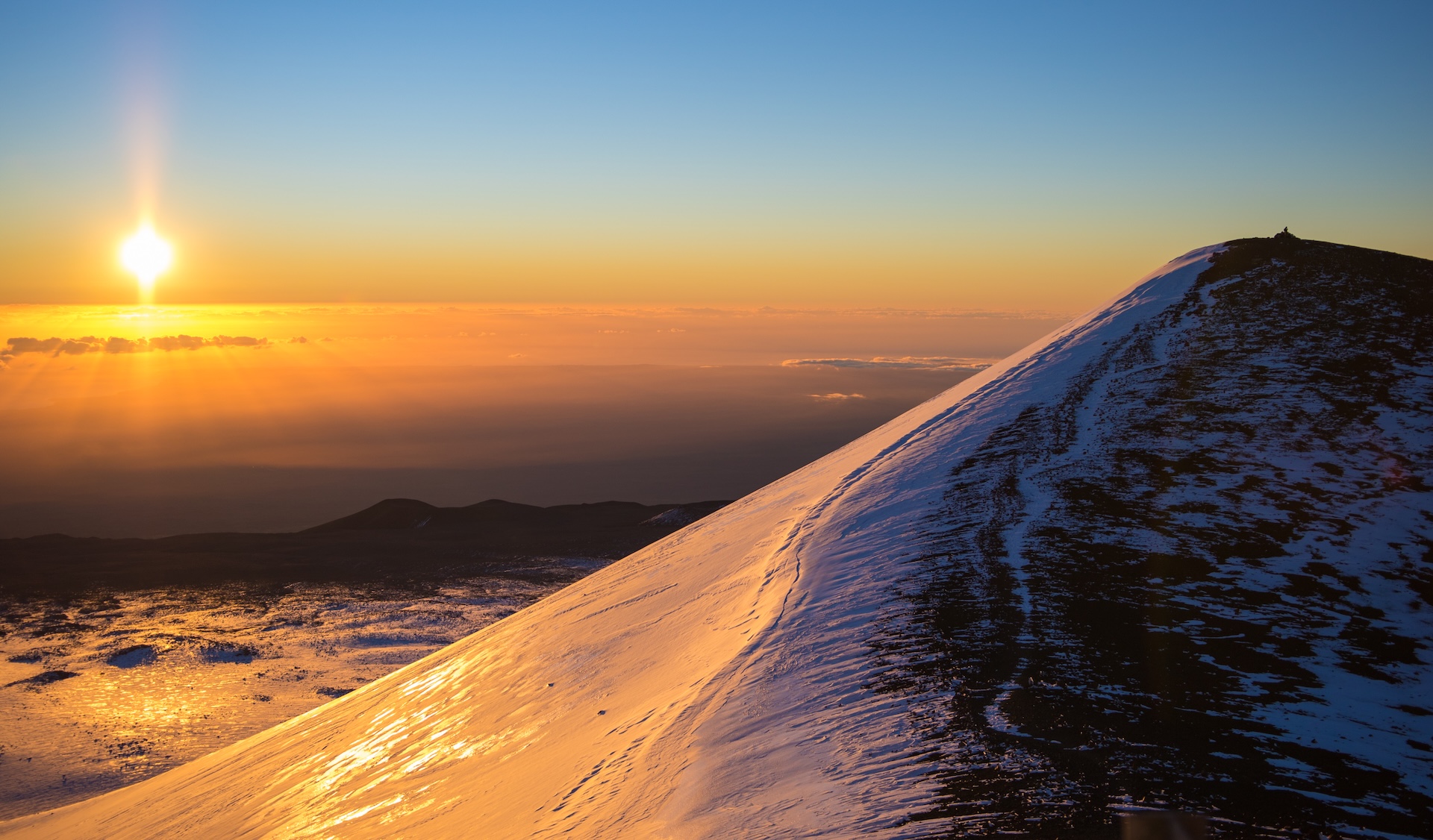
The drive to the summit of Mauna Kea is a journey to the highest point in the Pacific, offering views that stretch from coast to coast and an astronomical observatory experience unlike any other. While the destination is magnificent, the route demands respect and preparation. This guide provides the critical details for those planning to ascend Mauna Kea by vehicle.
Understanding the Mauna Kea Summit drive means focusing on three key aspects: the road itself, the extreme altitude, and the necessary vehicle considerations. Ignoring any of these can turn an awe-inspiring experience into a precarious one. Proper planning ensures a memorable and safe adventure.
The Mauna Kea Access Road: A Tale of Two Surfaces
The Mauna Kea Access Road begins its ascent from Daniel K. Inouye Highway (Saddle Road) State Route 200, near the 1,980-meter (6,500-foot) elevation marker. This initial stretch, approximately 10.5 miles, is a well-maintained paved road leading to the Maunakea Visitor Information Station (VIS) at 2,800 meters (9,200 feet).
Beyond the VIS, the character of the road changes dramatically. The next 4.5 miles are unpaved, consisting of a steep, narrow, and often rutted gravel section. This segment is challenging, with blind turns and loose material. Following this, the final 3.5 miles to the summit are paved again, but they are extremely steep and wind through a high-alpine desert environment.
- Paved to VIS: Smooth, two-lane, accessible to most standard vehicles.
- Unpaved beyond VIS: Steep, rough, gravel and dirt. Requires a 4WD vehicle with low-range gearing.
- Paved to Summit: Extremely steep, winding, narrow lanes dedicated to observatory traffic. Still requires 4WD due to grades.
Road Conditions and Closures
Weather on Mauna Kea can change rapidly. Fog, ice, and even snow are common, particularly during winter months (November-March). The Mauna Kea Rangers regularly monitor conditions and may close portions of the road or the entire summit for safety. ALWAYS check the current road status before you depart. This information is typically available on the Maunakea Visitor Information Station website or by calling their recorded line.
Conquering the Altitude: Safety First
The summit of Mauna Kea stands at 4,207 meters (13,803 feet) above sea level. This extreme altitude significantly reduces oxygen levels, which can lead to acute mountain sickness (AMS) if proper precautions are not taken. Symptoms can range from headache and nausea to dizziness and fatigue.
Acclimatization is Key
Crucial to summit safety is the acclimatization stop at the Maunakea Visitor Information Station. It is strongly recommended that all visitors spend at least 30 minutes, and ideally an hour, at the VIS to allow their bodies to adjust to the elevation. Children under 16, pregnant women, and individuals with respiratory or heart conditions should not ascend beyond the VIS.
- Stay hydrated: Drink plenty of water throughout the day.
- Avoid alcohol and heavy meals: Particularly on the day of your ascent.
- Descend immediately if symptoms appear: Do not push through altitude sickness; it can worsen rapidly.
- Dress warmly: Even on a sunny day, summit temperatures are often below freezing, intensified by wind chill.
Vehicle Requirements: Not All Rentals Are Equal
Driving to the summit requires a vehicle with low-range four-wheel drive (4WD). This is not merely a recommendation; it is a critical safety requirement enforced by the Mauna Kea Rangers.
- Why 4WD with Low Range? The unpaved section and the steep paved grades demand the traction and engine braking that only a true 4WD system with low range can provide. Using standard brakes on the long descent can lead to overheating and catastrophic failure.
- Rental Car Restrictions: Most major rental car companies (such as Hertz, Avis, Budget, etc.) explicitly prohibit taking their vehicles, even 4WD SUVs, beyond the Maunakea Visitor Information Station. Driving a rental car into the restricted zone above the VIS invalidates your rental agreement and subjects you to significant liabilities for damage, towing, or rescue.
- What to Do: If you insist on driving yourself beyond the VIS, you must rent a privately owned 4WD vehicle that specifically allows Mauna Kea summit access. These rentals are typically offered by smaller, local companies and come with specific insurance requirements. Another option is a private tour service.
Best Times to Visit and the Big Island Experience
While the Mauna Kea Summit is renowned for its stargazing, the facilities at the actual summit (the observatories) are not generally open to the public after dark due to ongoing research. Public stargazing programs are usually held nightly at the Maunakea Visitor Information Station. For those seeking the summit views, daytime access is generally until 30 minutes after sunset.
For a truly seamless and informative Mauna Kea experience, consider a private tour. Our professional guides handle all the logistics, including the appropriate 4WD vehicle and navigating the challenging road and altitude. This allows you to focus purely on the astounding landscapes and the quiet majesty of the mountain. Learn more about our customizable Big Island tours here.
The High-End Hawaii Take
Driving to the Mauna Kea Summit is a profound experience, but it is not a casual one. Respect for the mountain, its challenging terrain, and its extreme environment is paramount. Prepare meticulously, understand your vehicle's capabilities, and prioritize safety. Less crowd. More wow.
Keep going