
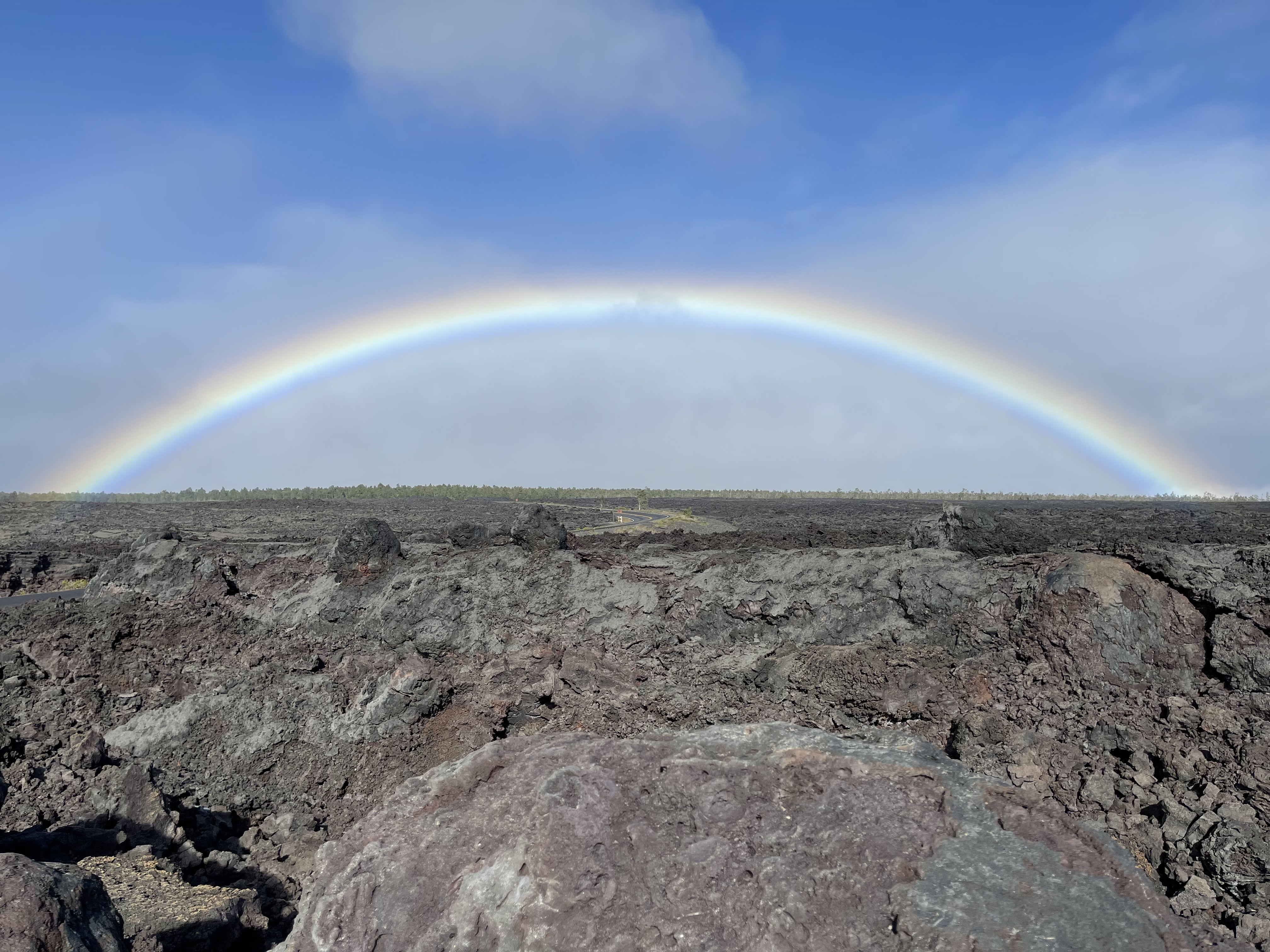
Kīlauea's summit has roughly half a dozen named overlooks. They are not interchangeable. Wind direction, gas concentration, and which side of Halemaʻumaʻu is active determine which one is the best vantage on any given day. Here is the overlook-by-overlook breakdown a Big Island guide actually uses when planning a visit.
The overlooks at a glance
- Kīlauea Overlook: Closest west-rim view of Halemaʻumaʻu. The default if it is open.
- Wahinekapu (Steaming Bluff): Wider angle, easy access.
- Keanakākoʻi Overlook: 1-mile walk, best south-side view.
- Uēkahuna: Highest summit rim. Top sunset choice.
- Kīlauea Iki Overlook: Looks into Kīlauea Iki, not Halemaʻumaʻu. Best for the 1959 fountain story.
Kīlauea Overlook
The single most reliable choice when the summit is erupting. Short walk from a paved parking lot, a railed platform on the west rim, and a direct line of sight into Halemaʻumaʻu. When the wind is favorable (typical trade winds carry vog away to the southwest), this is the easiest strong view in the park. When the wind reverses, rangers close it temporarily and redirect visitors to Wahinekapu or Keanakākoʻi.
Wahinekapu (Steaming Bluff)
Often described as the easy-access alternative to Kīlauea Overlook. The bluff itself is named for the persistent steam vents along its edge, which become more dramatic in cool morning air. The viewing angle is wider than Kīlauea Overlook, which makes it a better choice when an eruption is producing a tall plume that benefits from being seen in context.
Keanakākoʻi Overlook
Reached by walking out on a roughly 1-mile (round-trip) section of Crater Rim Drive that has been closed to vehicles since the 2018 collapse. The walk is mostly level and paved. The reward is the best south-side perspective on Halemaʻumaʻu, often the only overlook with a clear view of a south-vent fountain. Bring a headlamp if you are coming back after dark and a layer for the wind.
Uēkahuna
The former Jaggar Museum site. The highest point on the summit rim easily accessible by car, with a panoramic west-facing platform that has made it the default sunset location in the park. On a clear evening you can pick out the silhouette of Mauna Loa in the distance, the steaming caldera below, and the glow ramping up as the light drops. Parking fills 30 to 45 minutes before sunset on weekends.
Kīlauea Iki Overlook
A different crater entirely. Kīlauea Iki is the small pit adjacent to the main caldera, famous for its 1959 lava-fountain eruption that left the frozen lava-lake floor visible from the rim today. There is no current activity here, but the overlook gives the best preview of the Kīlauea Iki Trail (about 4 miles, descends across the crater floor) and is a worthwhile stop on any park visit.
After-dark viewing notes
- Arrive 30 to 45 minutes before sunset to claim parking and let your eyes adjust.
- Pack layers. Summit temperatures drop into the 50s°F after dark even in summer.
- Use red-filter headlamps if you have them. They preserve everyone's night vision at the overlook.
- Cell service at the summit is unreliable. Download offline maps before driving up.
Want someone else to handle the timing, the drive, and the call on which overlook to pick? The Private Big Island Volcano Tour is built around this exact problem.